

Africa, China, USA and the New Geometry of Global Balance
By Kirtan Bhana
17 May 2026
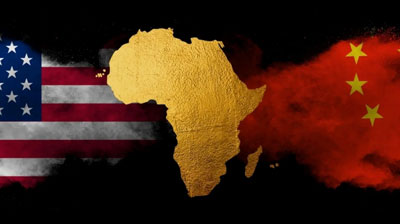
The contemporary international system is undergoing a quiet but decisive reconfiguration. It is not marked by the sudden collapse of an old order, but by the gradual emergence of overlapping centres of power, competing economic logics, and increasingly interdependent strategic choices. Within this shifting geometry, Africa is no longer a peripheral stage upon which global rivalries are enacted. It is becoming an active node in the design of global balance itself.
Recent diplomatic and economic developments reference this transition with unusual clarity. On one hand, high-level engagements between the United States and the People’s Republic of China, accompanied by prominent business delegations, have reaffirmed the complexity of their strategic interdependence, even amid persistent tensions over issues such as Taiwan, technology governance and global supply chains. On the other hand, China’s rollout of a sweeping tariff-free regime for African exports signals a deepening structural realignment in global trade architecture, one that directly intersects with Africa’s own integration agenda under the African Continental Free Trade Area (AfCFTA).
Taken together, these developments do not represent isolated moments. They form part of a broader rebalancing of global economic and political geometry.
A triangular world in motion
At the centre of this emerging configuration stand three critical actors: Africa, China and the United States.
The United States remains a foundational pillar of the global system. Its leadership in finance, technology, higher education, innovation ecosystems and defence architecture continues to shape global norms and institutions. Even as Washington navigates internal political polarisation and recalibrates its global posture, its strategic reach remains unmatched. The presence of American business delegations in contemporary diplomatic engagements reflects a consistent reality: that US private capital and innovation remain deeply embedded in global growth trajectories.
China, meanwhile, has consolidated its position as a central engine of global manufacturing, infrastructure development, and increasingly, trade liberalisation with the developing world. Its posture, particularly in relation to sovereignty issues such as Taiwan, remains firm, yet paired with an emphasis on long-term stability, dialogue and incremental global integration.
Africa occupies a different but increasingly pivotal position. It is no longer simply a recipient of external strategies; it is a continent actively constructing its own economic and institutional future. With the implementation of the AfCFTA, Africa is laying the groundwork for the world’s largest emerging single market, aiming to integrate fragmented national economies into a coherent continental production and trade system.
The interaction of these three trajectories is reshaping the “geometry” of global balance.
China–Africa trade liberalisation and the logic of structural alignment
A defining feature of this new phase is China’s introduction of a tariff-free trade regime for a wide range of African exports from states maintaining diplomatic relations with Beijing. This policy shift is not merely symbolic. It represents one of the most extensive unilateral market-access openings ever extended by a major global economy to a developing region.
By reducing tariff barriers on African goods, China is effectively lowering the structural cost of entry for African exports into one of the world’s largest consumer markets. This has immediate and long-term implications: it can expand agricultural exports, encourage agro-processing, stimulate light manufacturing, and support the gradual diversification of African economies away from raw commodity dependence.
In strategic terms, this move aligns closely with Africa’s own integration agenda under the AfCFTA, which seeks to deepen intra-African trade, strengthen regional value chains, and promote industrialisation across the continent. When external market access is combined with internal continental integration, the possibility emerges for a more balanced African economic architecture, one that is not solely export-dependent but increasingly value-added and production-oriented.
Countries such as South Africa have already recognised the potential advantages of this framework, particularly in relation to industrial goods and agricultural exports. Yet the broader significance extends beyond any single economy: it reflects a shift in how Africa is positioned within global trade networks.
The United States and the recalibration of global engagement
Against this backdrop, recent United States engagements with global partners, including China, highlight a parallel process of recalibration. While tensions over Taiwan remain a sensitive and defining issue in US–China relations, both sides continue to signal an awareness of the risks associated with uncontrolled economic fragmentation or geopolitical escalation.
The coexistence of competition and engagement is increasingly the defining feature of this relationship. Neither power appears willing to abandon strategic rivalry, yet both remain deeply invested in avoiding systemic breakdown. The presence of high-level business delegations accompanying the engagements further highlights this duality: strategic competition at the state level, but sustained interdependence at the economic level.
This dual structure suggests that the global system is moving away from binary alignment models toward a more complex framework of managed competition.
For Africa, this creates both opportunities and responsibilities. The continent is increasingly positioned not as an object of rivalry, but as a space of convergence where multiple external actors intersect economically and diplomatically.
Africa as a strategic actor, not a passive theatre
Perhaps the most significant transformation lies in Africa itself.
For decades, the continent was often framed through external narratives of aid dependency, resource extraction, or geopolitical competition. That framing is steadily eroding. Today, Africa’s demographic scale, resource base and integration agenda position it as a structural pillar of the global economy.
The African Union’s Agenda 2063 articulates a long-term vision of continental industrialisation, political coordination and social transformation. When combined with the AfCFTA’s implementation trajectory, Africa begins to resemble not a collection of fragmented states, but an emerging economic system in its own right.
In this context, China’s tariff-free access policy and the United States’ continued economic engagement should not be interpreted as competing “sides” in a zero-sum contest. Rather, they represent different forms of engagement with a continent that is itself evolving into a strategic centre of gravity.
Africa’s challenge is therefore not simply to attract external partnerships, but to shape the terms on which those partnerships operate.

Sovereignty, balance and the Taiwan question
The persistence of the Taiwan question within China–US relations serves as a reminder that sovereignty remains one of the most sensitive fault lines in the international system. It is also a test case for how competing political systems interpret legitimacy, territorial integrity and global norms.
Most African states maintain adherence to the One-China principle, reflecting long-standing diplomatic alignments as well as shared historical experiences of anti-colonial struggle and territorial consolidation. Yet Africa’s growing diplomatic maturity also means that such positions are increasingly embedded within broader calculations of national interest, economic development, and institutional partnerships.
This evolution reflects a wider shift: ideological alignment is giving way to strategic pragmatism.
Towards a multipolar equilibrium
What emerges from these intersecting developments is not a fragmented world, but a reconfigured one.
The global order is becoming more multipolar, but also more interdependent. Economic systems are increasingly connected even as political tensions persist. Trade liberalisation in one region intersects with strategic recalibration in another. Infrastructure investment, market access and technological exchange are no longer confined within rigid geopolitical blocs.
Within this evolving structure, Africa’s role is becoming increasingly central. It is simultaneously a beneficiary of external engagement, a participant in global trade expansion and a builder of its own continental system.
If managed with strategic coherence, this moment offers the possibility of a more balanced international order, one that moves beyond dominance and dependency toward negotiated interdependence.
Africa at the centre of a new global geometry
The convergence of US–China diplomatic engagement, Africa’s internal integration agenda, and China’s expanded tariff-free trade framework signals more than shifting policy choices. It signals the emergence of a new geometry of global balance.
In this geometry, power is no longer defined solely by unilateral dominance, but by the ability to shape networks, partnerships and systems of exchange.
Africa, long positioned at the margins of global decision-making, is increasingly situated at the intersection of these networks. Its demographic weight, economic potential and institutional integration efforts mean that it is no longer simply responding to global history, it is helping to construct it.
The emerging world order will not be defined by a single centre of gravity, but by a dynamic equilibrium among multiple centres of influence.
And within that equilibrium, Africa is not a passive field of competition.
It is becoming one of its principal architects.