


Informed India, Healthy India
From Data to Diplomacy - How the NFHS-6 Chronicles India's Health Revolution and Expanding Global Influence
By Kirtan Bhana and Anisha Pemjee
14 July 2026
When India launched its first National Family Health Survey (NFHS) in 1992, the country was embarking on a period of profound economic reform. Liberalisation had just begun, the economy was opening to the world, and policymakers recognised that sustainable development would require more than economic expansion alone, it would demand a clear understanding of the health and wellbeing of one of the world's largest populations.
More than three decades later, the Sixth National Family Health Survey (NFHS-6) tells an extraordinary story.
Conducted during 2023–2024 across 715 districts by the International Institute for Population Sciences (IIPS), the survey is among the most comprehensive public health assessments ever undertaken anywhere in the world. Covering a nation of more than 1.46 billion people, its findings are statistical benchmarks as well as indicators of a society that has undergone one of the most significant human development transformations of the twenty-first century.
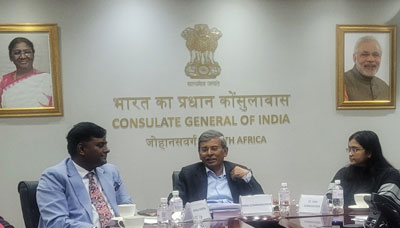
Presenting the findings in Johannesburg, India's High Commissioner to South Africa, Prabhat Kumar and recently arrived Consul General of India in Johannesburg S. Koventhan highlighted the survey as evidence of India's steady progress towards Universal Health Coverage and the Sustainable Development Goals (SDGs). Behind the numbers lies a broader narrative, one that demonstrates how sustained economic growth, political continuity, digital innovation and social investment have combined to improve the lives of hundreds of millions of people.
Economic Growth Creating Human Capital
India has emerged as one of the world's fastest-growing major economies, sustaining average annual growth exceeding six percent over the past two decades. In 2026, the country's nominal GDP is estimated at approximately US$4.7 trillion, making it the world's fourth-largest economy, while GDP per capita has risen to around US$3,200—more than tripling since the beginning of the century.
For a country of India's demographic scale, these gains are particularly significant. Every percentage point of economic growth represents opportunities for millions of citizens through employment, education, healthcare and improved living standards.
The NFHS-6 demonstrates that these economic gains have increasingly been converted into measurable improvements in human development.
Electricity coverage has reached 98.3 percent of households, while access to improved drinking water now stands at 96.5 percent. Nearly nine out of every ten Indian women own a bank account, a remarkable transformation in financial inclusion that has enabled government welfare payments to reach beneficiaries directly through digital platforms, improving both efficiency and transparency.
The relationship between economic expansion and social development has become increasingly evident: healthier populations are more productive, while stronger economies generate the resources required to invest further in healthcare, education and infrastructure.
A Quiet Revolution in Public Health
Perhaps nowhere is India's transformation more visible than in maternal and child healthcare.
Institutional deliveries have increased to 90.6 percent, ensuring that the overwhelming majority of births now occur under professional medical supervision. Skilled birth attendance has reached 91.3 percent, while 95.9 percent of pregnant women receive antenatal care.
Childhood immunisation coverage has climbed to 87.1 percent, protecting millions of children from preventable diseases and significantly reducing infant mortality.
The results are reflected in some of the survey's most compelling statistics. Maternal Mortality has declined from 254 deaths per 100,000 live births during 2004–2006 to 87 today—a reduction of approximately 65 percent. Infant Mortality has fallen from 39 to 24 deaths per 1,000 live births, representing one of the most meaningful indicators of improvements in healthcare access, nutrition and maternal wellbeing.
Equally significant is India's demographic transition. The Total Fertility Rate has stabilised at 2.0 children per woman, effectively reaching replacement level and signalling a new phase in the country's development. Rather than focusing solely on population growth, policymakers are increasingly able to prioritise quality healthcare, education, nutrition and healthy ageing.
Building Healthcare from the Community Up
India's achievements have not been driven solely by hospitals in major cities. Instead, they reflect decades of investment in primary healthcare and community participation.
More than 187,000 Ayushman Aarogya Mandirs and Health and Wellness Centres now provide frontline healthcare services across the country. Supporting this network are over one million Accredited Social Health Activists (ASHA workers), whose community engagement has become an internationally recognised model for preventive healthcare, maternal support and early intervention.
The digital transformation of healthcare has been equally remarkable. Through the eSanjeevani platform, more than 467 million telemedicine consultations have connected patients in remote communities with medical specialists, demonstrating how technology can bridge geographical disparities in healthcare access.
Health insurance coverage has expanded more than twelve-fold to reach 60.2 percent of the population through Ayushman Bharat and related initiatives, significantly reducing financial barriers to medical care.
Taken together, these developments represent one of the world's largest experiments in combining digital governance, community healthcare and universal access.
The Next Health Frontier
The NFHS-6 also reflects a changing national health agenda.
As infectious diseases decline and life expectancy increases, India now faces challenges familiar to many middle-income economies: obesity, diabetes, cardiovascular disease and other non-communicable diseases associated with urbanisation and changing lifestyles.
Government initiatives such as Fit India, Khelo India, Eat Right India and expanded Yoga programmes indicate a strategic shift from treating illness towards promoting lifelong wellness and preventive healthcare.
This evolution mirrors global thinking that sustainable healthcare systems must encourage healthier lifestyles alongside improved medical treatment.
Ancient Wisdom in a Modern Health System
One of the most distinctive aspects of India's health philosophy is its ability to integrate modern medical science with centuries-old traditions of preventive wellbeing.
Long before wellness became a global industry, India had developed sophisticated systems centred on balance, nutrition, movement and holistic health.
Yoga, today practised by hundreds of millions of people worldwide, is perhaps the country's most recognisable contribution to global wellbeing. Its annual celebration through the International Day of Yoga, adopted unanimously by the United Nations in 2014, has become a powerful symbol of India's soft power and cultural diplomacy.
Alongside Yoga, Ayurveda continues to offer an indigenous healthcare philosophy emphasising prevention, healthy living and harmony between body, mind and environment.
Recognising the growing international interest in traditional medicine, the World Health Organization established its Global Centre for Traditional Medicine in Jamnagar, Gujarat, in partnership with the Government of India. The centre is helping to build evidence-based research and international collaboration around traditional medical systems, reflecting a broader effort to integrate indigenous knowledge with contemporary scientific inquiry.
Shared Wisdom Between India and Africa
For Africa, these developments hold particular relevance. Across the continent, indigenous knowledge systems have long recognised the importance of medicinal plants, community health, nutrition, spirituality and preventive care. While India's Ayurveda and Africa's traditional healing practices developed independently, both emerge from civilisations that understood health as a holistic concept rather than simply the treatment of disease.
This shared philosophical foundation presents an opportunity to deepen cooperation through what might be termed Health and Wellness Diplomacy.
India's expanding partnerships with African countries already encompass pharmaceuticals, vaccine manufacturing, digital public infrastructure, medical education and capacity building. Increasingly, these partnerships can also embrace preventive healthcare, community health workers, traditional knowledge research, nutrition programmes and digital health innovations.
South Africa and India, as partners in the Global South through forums such as BRICS, the G20 and the India–Africa Forum Summit process, are well positioned to champion approaches to healthcare that combine scientific excellence with culturally grounded solutions.
Such collaboration reflects a broader understanding that diplomacy today extends beyond foreign ministries and trade agreements. It increasingly encompasses the exchange of knowledge, technology and public policy that improves people's quality of life.
Measuring Progress, Building Partnerships
The NFHS-6 is therefore much more than a health survey. It is evidence that long-term planning, data-driven governance and sustained investment in human development can transform a nation of continental proportions. It demonstrates how economic growth can translate into healthier mothers, stronger children, empowered women and more resilient communities.
Perhaps most importantly, it reminds us that development is ultimately measured not only in economic output, but in the wellbeing of people.
For India, the survey marks another milestone in its journey towards universal health coverage.
For Africa, it offers practical lessons in community-based healthcare, digital innovation and evidence-led policymaking.
And for the wider Global South, it illustrates how development, diplomacy and traditional knowledge can converge to create healthier societies.
In an era increasingly defined by pandemics, climate-related health challenges and lifestyle diseases, health has become one of the defining frontiers of diplomacy. India's experience demonstrates that when economic progress is matched by investments in people, healthcare becomes more than a public service—it becomes an instrument of national resilience, international cooperation and sustainable development.
The story told by the NFHS-6 is therefore not only India's story. It is an illustration of what informed governance can achieve when knowledge, policy and human wellbeing advance together.