


Nigeria and Saudi Arabia Deepen Economic Partnership Through Diaspora-Led Investment Initiative
By Abdur-Rahman Balogun
Head: Media, Public Relations and Protocols Unit, NiDCOM
5 August 2026
As global economic power continues to shift toward emerging markets, Nigeria and the Kingdom of Saudi Arabia are positioning their longstanding relationship for a new era defined not only by faith and cultural ties, but increasingly by investment, trade, innovation and sustainable economic development.
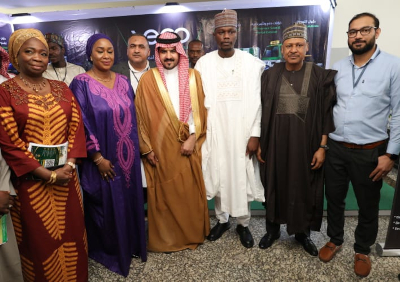
This vision was reinforced during the Second Nigeria-Saudi Diaspora Investment and Tourism Exhibition, held at the Shehu Musa Yar'Adua Centre in Abuja under the theme, "The Misconceptions, Challenges and Opportunities of Investing in Saudi Arabia and Nigeria Today." The summit brought together senior government officials, diplomats, business leaders, investors and members of the Nigerian diaspora to explore practical pathways for strengthening bilateral economic cooperation.
Opening the summit on behalf of President Bola Ahmed Tinubu's administration, Vice President Kashim Shettima called for a deeper and more diversified partnership between Africa's largest economy and one of the Middle East's fastest-transforming nations.
Represented by his Senior Special Assistant on Export Expansion, Aliyu Bunu Sheriff, the Vice President observed that despite warm diplomatic relations spanning decades, economic engagement between Nigeria and Saudi Arabia remains below its full potential. He urged both countries to embrace a broader commercial agenda capable of generating sustainable economic growth and long-term prosperity.
Central to this vision is Nigeria's expanding halal economy, where sectors such as agriculture, livestock, Islamic banking and finance, pharmaceuticals, food production and tourism offer significant opportunities for Saudi investment. Shettima also highlighted ongoing reforms under President Tinubu's Renewed Hope Agenda aimed at improving the ease of doing business and creating a more competitive investment environment for domestic and international investors.
The summit highlighted the growing recognition that Nigeria's economic transformation requires stronger partnerships with fellow emerging economies that share complementary development ambitions.
Delivering the keynote address, Minister of Information and National Orientation Mohammed Idris described the exhibition as a timely platform that brings government institutions, private enterprise and development stakeholders together to convert dialogue into tangible investment outcomes.
He reaffirmed the Federal Government's commitment to improving Nigeria's investment climate through policy reforms, human capital development, enhanced security and increased global competitiveness. He also encouraged Nigerians living in Saudi Arabia to view themselves not only as ambassadors of their country but as catalysts for investment, technology transfer and national development.
Diaspora diplomacy emerged as one of the defining themes of the summit.
Chairman and Chief Executive Officer of the Nigerians in Diaspora Commission (NiDCOM), Hon. Abike Dabiri-Erewa, described the gathering as an important mechanism for building trust, strengthening transparency and fostering greater economic diversification between the two countries.
She emphasised that Nigeria remains open for business across a wide range of sectors including hospitality, tourism, agriculture, logistics, healthcare and trade, while highlighting the diaspora's unique ability to facilitate knowledge exchange, investment partnerships and commercial confidence.
Dabiri-Erewa also commended the organisers, Al-Yaro International Limited, for creating an innovative platform that promotes networking, policy dialogue and mutually beneficial investment opportunities between Nigeria and Saudi Arabia.
Addressing the diplomatic dimension of bilateral relations, Nigeria's Ambassador to Saudi Arabia, Dr. Yakubu N. Gambo, noted that misconceptions continue to hinder stronger commercial engagement despite the enormous complementarities between both economies.
He stressed that transparent governance, sound policy frameworks and sustained collaboration are essential to unlocking greater investment flows.
According to Ambassador Gambo, Nigeria's youthful population and expanding capabilities in technology, agriculture, healthcare and the creative industries align naturally with Saudi Arabia's Vision 2030 priorities, which include mining, logistics, agriculture, tourism, information technology and economic diversification beyond hydrocarbons.
Business leaders echoed these sentiments throughout the summit.
Engr. Ibrahim Usman, Head of the Nigeria-Saudi Arabia Chamber of Commerce, argued that relations between the two nations should evolve beyond their traditional focus on Hajj and religious pilgrimage toward a broader economic partnership.
He outlined initiatives designed to reduce commercial fraud, improve transaction transparency and strengthen bilateral trade, while identifying the halal economy—particularly export-quality agricultural products—as one of the most promising areas for future collaboration.
Former Vice President of the Islamic Development Bank, Dr. Mansur Muhtar, similarly encouraged investors to look beyond oil and explore emerging sectors including renewable energy, real estate, tourism and sustainable agriculture.
He described improved ease of doing business as a natural bridge connecting both economies and emphasised that sustainable investment models would deliver the greatest long-term benefits for both countries.
Sub-national governments are equally seeking to leverage the renewed momentum.
Representing Kaduna State Governor Uba Sani, Commissioner for Business, Innovation and Technology Mrs. Patience Fakai highlighted Kaduna's growing reputation as one of Nigeria's leading investment destinations. She noted that reforms inspired by the Federal Government's investment agenda have strengthened security, infrastructure and agricultural development while improving the state's business environment.
Now ranked among Nigeria's top-performing states by the Presidential Enabling Business Environment Council (PEBEC), Kaduna is actively courting investment in mining, agriculture and tourism, the latter representing significant untapped growth potential.
Summit organiser Musa Yaro, Managing Director of Al-Yaro International Limited, expressed confidence that the exhibition would generate high-value partnerships capable of reshaping commercial relations between the two countries.
With participation from more than 100 exhibitors and over 500 delegates, the exhibition reflects growing confidence that diaspora networks can serve as strategic bridges between governments, investors and private enterprise.
The event concluded with awards recognising organisations that have contributed to advancing economic development and bilateral cooperation, including ARISE, Faiz Takaful, Vego Energy Solutions, TMDK Group, Zee Coffee, NiDCOM and several other partners.
Beyond the immediate business opportunities, the Nigeria-Saudi Diaspora Investment and Tourism Exhibition reflects a broader shift in international economic diplomacy. As Saudi Arabia accelerates its Vision 2030 transformation and Nigeria pursues economic diversification under the Renewed Hope Agenda, both nations are increasingly viewing one another as strategic partners capable of delivering mutual growth through investment, innovation, trade and people-to-people engagement.
For Africa and the wider Global South, the summit illustrates the growing importance of diaspora communities as catalysts for economic diplomacy—transforming cultural and historical connections into practical engines for sustainable development, investment and shared prosperity. - TDS