


Japan Emerges Eighty Years After War, Shapes Its Own Destiny
By Kirtan Bhana
13 July 2026
The world often remembers Japan through the lens of August 1945. On 6 August, Hiroshima became the first city in history to experience the devastation of an atomic bomb. Three days later, Nagasaki suffered the same fate. Together, the attacks claimed the lives of hundreds of thousands of people, either immediately, or through the long and painful effects of radiation exposure, bringing the Second World War to its conclusion.
For Japan, the only nation ever subjected to nuclear warfare, the physical destruction was accompanied by profound national trauma. Entire cities disappeared. Families were shattered. Economic collapse, social upheaval and decades of reconstruction followed. The Japanese people rebuilt their country from the ashes with remarkable determination, choosing not revenge, but renewal.
Eighty years later, the story of modern Japan is no longer defined by defeat but by one of history's greatest national transformations.
The post-war settlement fundamentally reshaped Japan's security architecture. Under a new constitution, Japan renounced war as an instrument of national policy and embraced an exclusively defence-oriented posture. The establishment of the Japan Self-Defense Forces (JSDF) in 1954 reflected this new philosophy of a military dedicated not to conquest, but to the protection of its people and the preservation of peace.
The security alliance with the United States became a cornerstone of Japan's post-war recovery and regional stability. It provided reassurance during the Cold War while allowing Japan to focus its energies on economic development. The alliance has endured because successive governments in both countries have judged it to be mutually beneficial.
Yet history also reminds us that alliances evolve. Eight decades after the end of the Second World War, Japan is no longer the occupied nation of 1945. It is the world's fourth-largest economy, one of the globe's foremost technological innovators, a leading democracy and among the international community's most reliable contributors to development, humanitarian assistance and peacebuilding.
Japan has demonstrated that military restraint need not equate to international passivity. Since participating in United Nations peacekeeping operations in Cambodia in 1992, the Japan Self-Defense Forces have served in missions across Africa and beyond, including Mozambique, Sudan, South Sudan, the Sinai Peninsula and anti-piracy operations from Djibouti. Rather than projecting power through force, Japan has earned respect through professionalism, humanitarian assistance, disaster relief and support for international peace.
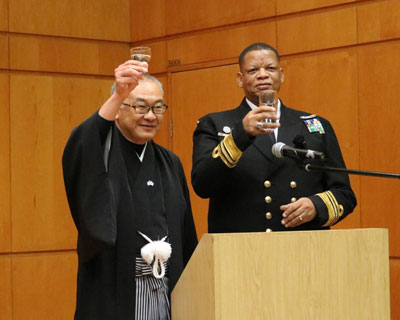
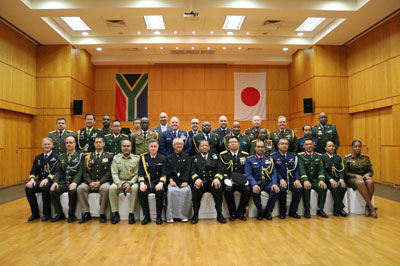
These achievements were reflected in the remarks delivered by Japan's Ambassador Fumio Shimizu during the 72nd anniversary reception of the Japan Self-Defense Forces in Pretoria. The Ambassador spoke not only of Japan's commitment to peace, but also of an increasingly complex international security environment requiring greater responsibility, stronger partnerships and credible defence capabilities that support diplomacy rather than replace it.
This reflects an important evolution in Japan's strategic thinking. Today's geopolitical environment is markedly different from that of 1945 or even the Cold War. Rising regional tensions, threats to maritime security, cyber warfare, terrorism and humanitarian crises require nations to assume greater responsibility for their own security while contributing constructively to collective stability.
Japan has shown that it is prepared to do precisely that.
Prime Minister Sanae Takaichi’s government has recognised that Japan's responsibilities extend beyond economic leadership. They include helping to safeguard the rules-based international order, supporting freedom of navigation, strengthening regional partnerships and contributing to peace in the Indo-Pacific and beyond. These are not the actions of a nation seeking militarisation, but of a mature power accepting the obligations that accompany global influence.
The time has therefore come to recognise an important reality. Japan has long since demonstrated that it is a responsible and trusted member of the international community. Its democratic institutions are deeply entrenched. Civilian oversight of its armed forces is robust. Its commitment to international law is unwavering. Its foreign policy continues to emphasise diplomacy, cooperation and multilateralism.
Japan has paid a high price for the lessons of war and has transformed itself completely.
Japan's contribution extends well beyond economics and security. It has enriched the world through its civilisation spanning millennia, its philosophy, culture and innovation. Japanese concepts such as kaizen (continuous improvement), ikigai (purpose in life), omotenashi (selfless hospitality) and Zen philosophy have influenced business, education, wellness and leadership across continents. Japanese cuisine has become a global ambassador for health and culture, while Japanese design, engineering, literature, cinema and technology continue to shape modern life.
This is a nation that has consistently chosen to build rather than destroy.
As the international community reflects on the eightieth anniversary of the end of the Second World War, it is appropriate not only to remember Japan's suffering, but also to acknowledge its extraordinary journey. The country that emerged from Hiroshima and Nagasaki is not the Japan that stands before the world today.
Modern Japan has earned the confidence of the international community through eight decades of responsible statecraft, democratic governance and peaceful engagement. Its future should continue to be guided by the choices of the Japanese people themselves, exercised through their democratic institutions and in partnership with allies and friends.
History imposed extraordinary burdens upon Japan. History also records how honourably it has carried them. Japan has paid its dues. It stands today as a nation that has redefined itself, emerging from the shadows of the past as a sovereign nation whose experience, wisdom and leadership have become indispensable to building a more peaceful, stable and prosperous world.