


Victory Day Remembered Amid a World Still at War
By Anisha Pemjee and Kirtan Bhana
8 May 2026
Eighty-one years after the guns of the Second World War fell silent across Europe, the lessons of that conflict remain deeply relevant in a world once again marked by growing geopolitical tension, military confrontation and ideological division.
On the night of 8 May 1945, at 23:01, Wilhelm Keitel signed Nazi Germany’s unconditional surrender, formally bringing the war in Europe to an end. Due to the time difference, it was already 9 May in Moscow, a date that has since become known across Russia and much of the former Soviet Union as Victory Day.
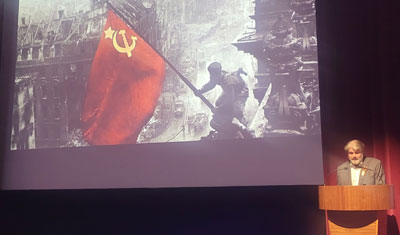
That historic moment was commemorated in Pretoria this week, where the Russian Embassy hosted a Victory Day event reflecting on the sacrifices made during what Russia refers to as the Great Patriotic War.
The evening included the screening of the film 'Invincible', based on the real-life story of Soviet tank commander Semyon Konovalov and his KV-1 crew, who destroyed multiple German armoured units during fierce fighting in the Rostov region. While the film highlighted battlefield courage, the broader message of the evening focused on the devastating human cost of war.
In his address, Ambassador of the Russian Federation, Roman Ambarov described the Soviet Union’s role in defeating Nazi Germany as decisive in ending fascism and restoring peace to Europe. He noted the enormous sacrifice made by the Soviet people between 1941 and 1945, with an estimated 27 million lives lost and thousands of cities and villages destroyed.
Ambassador Ambarov also acknowledged South Africa’s wartime contribution through its support of Allied operations, including supplying resources, opening strategic ports and deploying troops and pilots.
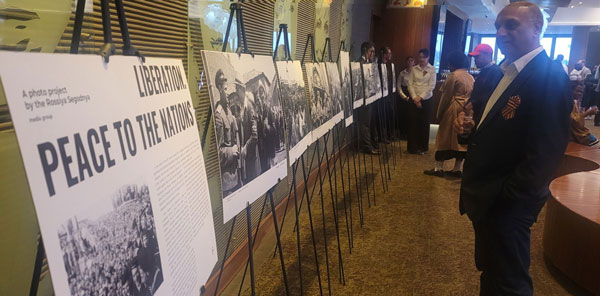
Guests also viewed exhibitions depicting South Africa during the war, the liberation of Belgrade, and the Soviet Union and China’s role in bringing the conflict in the Asia-Pacific to a close against imperial Japan.
Musical performances by Russian duet “Bohemia,” featuring violin and balalaika renditions of wartime songs, added a reflective atmosphere to the commemoration.
Beyond the ceremonies and historical remembrance, the event carried an underlying relevance to current global affairs. As conflicts continue in different parts of the world and relations between major powers become increasingly strained, the anniversary serves as a reminder of the consequences of prolonged confrontation and unchecked political extremism.
The Second World War reshaped the global order but also left behind destruction on a scale the world had never witnessed before. Entire cities were erased, millions displaced, and generations marked by loss. While modern conflicts differ in form and context, the risks of escalation and deepening divisions remain real.
Victory Day commemorations are therefore not only about remembering military victory, but also about recognising the value of diplomacy, international cooperation and stability in an increasingly uncertain global environment.
More than eight decades later, the message remains straightforward: the cost of war is always far greater than the promises made before it begins.