


The Shared History, Renewal and Strategic Solidarity between Mauritius and South Africa
By Kirtan Bhana
20 April 2026
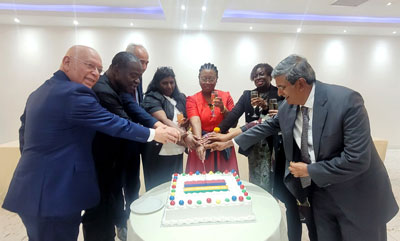
The celebration of the 58th National Day of Mauritius (March 12), hosted in Pretoria on 17 April, was an occasion that reflected a deeper resonance to reaffirm the enduring bonds between two nations shaped by history, resilience and a shared vision for the future.
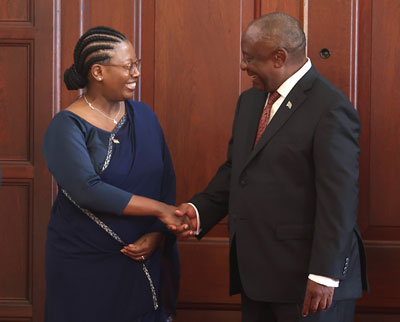
Ms Maria Francesca Mireille Martin, whose appointment as High Commissioner to South Africa, signals both continuity and renewal in Mauritius–South Africa relations. A seasoned journalist turned parliamentarian, who rose to serve as Minister of Gender Equality, Child Development and Family Welfare in Mauritius, Martin brings to her diplomatic role a rare blend of media insight, governance experience and cultural fluency. Her passion for languages is evident in her establishment of a translation enterprise which further reflects a commitment to bridging divides, a quality essential in diplomacy.
Her remarks on the occasion were both reflective and forward-looking, grounded in the theme of Mauritius’ national identity: “In Peace, Justice and Liberty.” These values, she noted, are embedded in the Mauritian ethos, shaped by a multicultural society that mirrors South Africa’s own “rainbow nation” identity.
Indeed, the parallels between Mauritius and South Africa are striking. Both nations have emerged from complex histories marked by colonialism, racial stratification and the long journey toward inclusive democracy. This shared past has evolved into a dynamic partnership rooted in multilateralism, respect for international law and a collective commitment to African advancement. Mauritius’ hosting of institutions such as the Indian Ocean Rim Association and its positioning as a strategic link between Asia and Africa positions its ambition to serve as a conduit of cooperation, an ambition that aligns closely with South Africa’s continental leadership role.
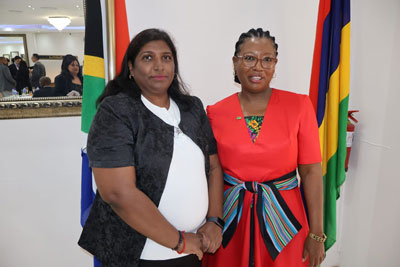
Delivering the keynote response, Acting Director-General at the Department of Justice and Constitutional Development, Kalay Pillay highlighted the depth and breadth of bilateral engagement. Her remarks carried a conciliatory and constructive tone, emphasising the importance of revitalising institutional mechanisms such as the Joint Commission of Cooperation (JCC), set to be inaugurated later this year. This platform is expected to reinvigorate collaboration across critical sectors, including digital communication technologies, maritime cooperation and people-to-people exchanges.
Particularly significant is the renewed focus on ocean economy cooperation in an area of growing strategic importance for both nations. With Mauritius’ geographic positioning in the Indian Ocean and South Africa’s maritime capabilities, the potential for synergy is considerable. Pillay also pointed to cultural diplomacy initiatives, including the revival of twinning agreements between Robben Island and Le Morne Brabant, as powerful symbols of shared heritage and collective memory.
Economic ties between the two countries continue to flourish. South Africa stands as one of Mauritius’ largest investors, with trade volumes reaching approximately R11.8 billion, a figure poised to grow further with the full implementation of the African Continental Free Trade Area (AfCFTA). These figures, however, tell only part of the story. Beneath them lies a deeper narrative of trust, cooperation, and mutual aspiration.
Martin’s address also touched on broader global challenges, notably climate change, a pressing concern for Small Island Developing States (SIDS) like Mauritius. Her acknowledgement of South Africa’s role within the G20 in advancing climate finance initiatives for vulnerable nations highlighted the importance of collective leadership in addressing existential threats.
Equally important is Mauritius’ ongoing quest to complete its decolonisation process, including sovereignty over the Chagos Archipelago. In the current geopolitical climate, this issue resonates beyond bilateral relations, touching on broader themes of historical justice, territorial integrity and the continuing project of Africanisation beyond the legacy of colonialism.
The discourse also reflected on milestones such as the anniversary of the Durban Declaration and Programme of Action, a reminder that the fight against racism, xenophobia and inequality remains ongoing. Both Mauritius and South Africa reaffirmed their commitment to these principles, recognising that true progress is inseparable from human dignity and inclusion.
What emerged most powerfully from the event was the centrality of people-to-people relations. Diplomacy, in this context, is not confined to formal agreements or policy frameworks, it is lived through cultural exchange, educational collaboration and shared narratives. Mauritius’ scholarship programmes for African students, its outreach to regional partners, and its investment in human development all point to a diplomacy that is as humane as it is strategic.
Yet, beyond the words, the occasion itself stands as a testament to a relationship that has matured through history and is now poised for deeper collaboration. In an era where global fragmentation often dominates headlines, the Mauritius–South Africa partnership offers a compelling counter-narrative, one of solidarity, shared purpose and forward-looking engagement.