


Celebrating 30 years of diplomatic relations between Philippines and South Africa
11 December 2023
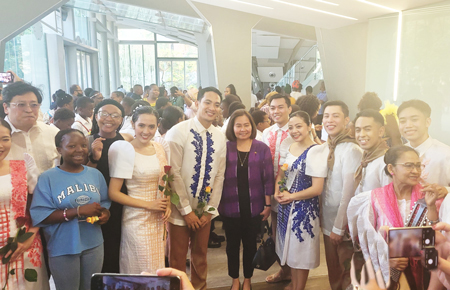
The KALOOB (pronounced kalo-ób) Philippine Music and Dance Ministry regaled its audience with a journey, not only to the Philippines, but also through time. The afternoon performance took place at the Aula Theatre at the University of Pretoria in celebration of 30 years of diplomatic relations between Philippines and South Africa.
Ambassador of Philippines Noralyn Jubaira Baja emphasized the commonalities between these two geographically distant nations including their experiences with colonialism and oppression as well as their common values of commitment to democracy and the rule of law. The two countries also work together in various multilateral organisations to build a more inclusive, just, prosperous and safer world, she said.
South Africa’s recent status as a sectoral Dialogue Partner to ASEAN will also pave the way for enhanced corporation between the two countries, said Baja. In recent years the bilateral ties between these two nations has seen significant growth. Baja said that she looks forward to the implementation of the recently signed bilateral agreement initiatives and programs which span a broad spectrum of sectors.
KALOOB, which means gift, is a professional dance group from the Philippines and is a fierce advocate for the documentation, preservation and promotion of Filipino indigenous music, dance and rituals.
This group was founded in 1994 and is committed to the research, redemption and promotion of indigenous culture for use in contemporary Christian evangelisation and worship. The group comprises of musicians, dancers, researchers and enthusiasts and this was their first time performing in South Africa.
The program went from Indigenous dances from the region, and as if with a time machine, the group took the audience through the centuries eventually ending up with dances in and around, and influenced by Spanish colonial times. The performance was accompanied by fantastical music which started by being played on traditional instruments of the region like gongs, drums and gamelan. In the second half of the performance, moving towards the Spanish colonial dances, the group was accompanied by instruments like the guitar and castanets.
Along with the beautiful dances, music and instrumentation, the performance was elevated by the stunning costumes and props and exciting costume changes which smoothly transitioned between the different dances and dance styles. The indigenous clothes slowly and clearly became more influenced by the Western influences of the colonial fashion.
All-in-all, the show was full of awe and excitement brought to the audience by skilful dancers and musicians. It was a dance show that carried the history of a nation.