19 October 2026 Issue 358 - From Indenture to Nobel Prize
|
|
|
|---|
|
| Navi Pillay's Nobel Peace Prize honours a journey from indenture to international justice |
|
|
|---|
 |
|
|---|
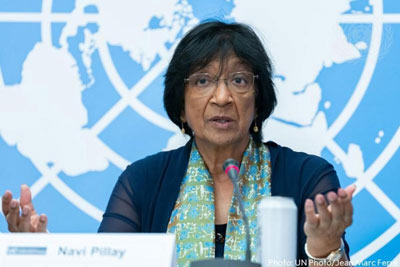
Nobel Peace Prize winner Navi Pillay (photo: GCIS) |
|
|---|
The awarding of the 2026 Nobel Peace Prize to South African jurist Navanethem “Navi” Pillay is a moment of international recognition for a career dedicated to human rights and the rule of law. It is also an opportunity to reflect on a family history shaped by colonial labour exploitation and a life forged under apartheid, two systems that determined who could exercise freedom, dignity and power. Pillay was awarded the Nobel Peace Prize on 9 October 2026 for her efforts to promote peace and international law. The Norwegian Nobel Committee recognised her contribution to strengthening international justice and the principle that those responsible for war crimes, crimes against humanity and genocide must be held accountable. Pillay’s family history connects to the arrival of Indian indentured labourers in colonial Natal. Her grandfather was among those brought from India to work on sugar plantations under the British indenture system. Known as Girmityas, indentured workers entered contracts under deeply unequal conditions, facing harsh labour, restricted freedoms and limited protection against exploitation. More than 150,000 Indian indentured workers arrived in Natal between 1860 and 1911, largely to meet the labour demands of the sugar industry.
|
|
|---|
|
| Atomic Energy Education and Industry at the heart of Nuclear Day in Johannesburg |
|
|
|
|---|
Russian Ambassador Roman Ambarov with speakers and participants (photo: Embassy of Russia) |
|
|---|
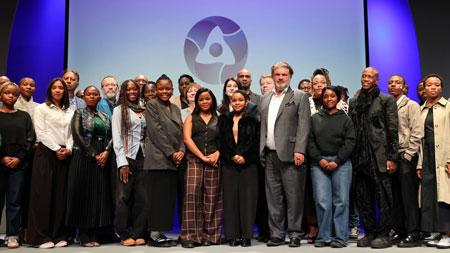
The peaceful use of nuclear technology presents an important opportunity for Africa as the continent addresses interconnected challenges of energy security, industrialisation, water scarcity, climate change and the development of advanced scientific skills. These issues were at the centre of Nuclear Day: Industrial and Educational Partnership Seminar – “Nuclear Technologies and Education: Energy and Non-Energy Solutions”, held in Johannesburg on 1 October 2026 by the Embassy of the Russian Federation in South Africa and Lesotho and Rosatom Central and Southern Africa. The seminar brought together perspectives on nuclear energy, industrial cooperation, education and the wider applications of nuclear technology. Presentations covered small nuclear power plants, modern large-scale and floating reactors, radiation protection and radioecology, nuclear desalination, geology and mining education, artificial intelligence and digital twins, as well as the training of nuclear engineering professionals. |
|
|---|
|
Council of Arab Ambassadors in South Africa and AUDA-NEPAD Strengthen Arab-African Development Partnerships |
|
|
|---|
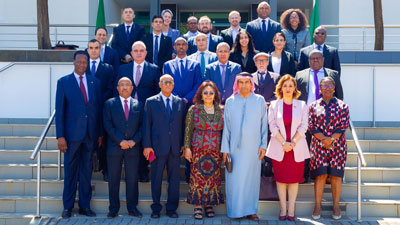
Council of Arab Ambassadors accredited to the Republic of South Africa with officials of AUDA-NEPAD |
|
|---|
The Council of Arab Ambassadors accredited to the Republic of South Africa paid an official visit to the headquarters of the African Union Development Agency–NEPAD (AUDA-NEPAD) on Monday, 12 October 2026, where they held a meeting with Dr. Nardos Bekele-Thomas, Chief Executive Officer of the Agency, and several senior officials. The meeting focused on ways to strengthen Arab–African cooperation and explore opportunities for establishing development and economic partnerships in areas of shared priority. The visit began with a welcome reception for the Arab diplomatic delegation by the Agency’s Chief Executive Officer and senior officials, followed by a guided tour of AUDA-NEPAD headquarters, during which the ambassadors were briefed on the Agency’s mandate, activities, and development programmes. Dr. Nardos Bekele-Thomas delivered a presentation outlining the Agency’s mandate, strategic priorities, and flagship programmes, as well as its role in implementing the African Union’s Agenda 2063, achieving the Sustainable Development Goals, promoting economic and regional integration, and mobilising resources and expertise to support development across the African continent. |
|
|---|
| Africa launches credit rating agency to address financial challenges |
|
|
|---|
Africa has officially launched its own credit rating agency, marking an important milestone in efforts to improve how African economies are assessed, address longstanding concerns over high borrowing costs and attract more investment for development. The Africa Credit Rating Agency (AfCRA), launched in Mauritius on 7 October 2026, is an independent, private sector-driven institution established to bring additional data, knowledge and perspectives into the assessment of African economies. It will complement, rather than replace, existing international credit rating agencies. The launch follows years of work by the African Union and the African Peer Review Mechanism (APRM), supported by the Economic Commission for Africa (ECA), African financial institutions and other partners. African Union Commission Chairperson, Mahmoud Ali Youssouf, described the launch as an important milestone in Africa's economic development, while emphasizing that the agency must maintain its independence to earn the confidence of investors and financial markets.
|
|
|---|
| | The Future of Africa-Europe Relations |
|
|
|---|
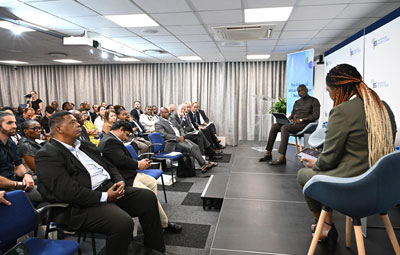
Minister Ronald Lamola with Programme Director, Ottilia Maunganidze (photo: Jacoline Schoonees/Dirco) |
|
|---|
South Africa’s Minister of International Relations and Cooperation, Ronald Lamola, delivered the keynote address on The Future of Europe-Africa Relations: From Intent to Practice in Pretoria on 12 October 2026. His address examines the historical foundations of relations between the two continents and the challenges of building a partnership that responds to changing geopolitical realities. Lamola addressed Africa’s priorities in industrialisation, trade, infrastructure financing and global governance, while highlighting areas of tension, including climate policy and the legacy of unequal economic relations. He called for a renewed compact based on mutual respect, shared responsibility and practical cooperation that delivers tangible benefits for both continents. |
|
|---|
| Inside Suzhou, a historic Chinese city turning reform and opening up into global opportunities |
|
|
|
|---|
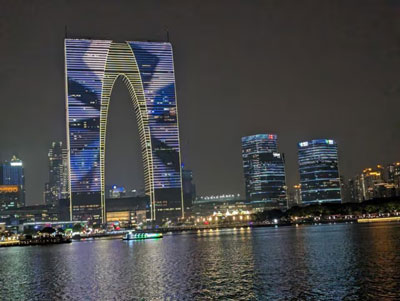
Located in Jiangsu Province, close to Shanghai and at the heart of the Yangtze River Delta, Suzhou has developed into one of China’s major economic centres. |
|
|---|
The story of a city’s transformation is often told through its economic growth, modern buildings and technological achievements. In Suzhou, however, the story is much broader. Here, modern industrial parks, research laboratories and emerging technologies exist alongside centuries-old gardens, historic neighbourhoods and waterways that remain part of everyday life. Located in Jiangsu Province, close to Shanghai and at the heart of the Yangtze River Delta, Suzhou has developed into one of China’s major economic centres. Founded in 514 BC, the city has more than 2,500 years of history. Over time, it has also become an important destination for investment, industrial development and international cooperation under China’s reform and opening-up policy. |
|
|---|
|
|