28 May 2026 Issue 351 - Things Fall into Place
|
|
|
|---|
Africa’s Long Return to the Centre of History
There are moments in history when events that once appeared isolated begin to reveal themselves as part of a larger civilisational pattern. What seemed fragmented suddenly aligns. Political shifts, economic integration, cultural awakenings and geopolitical realignments begin moving in concert. In Africa today, things are falling into place. The emergence of the African Continental Free Trade Area (AfCFTA) is an economic arrangement and a bureaucratic trade mechanism, that is the material expression of a deeper continental awakening, the consolidation of an African consciousness that has endured centuries of conquest, extraction, division and misrepresentation. It represents the return of agency to a continent that has too often been described by others instead of defining itself. For generations, Africa has been framed through lenses of deficiency, poverty, instability, conflict and dependency. Yet this framing has always concealed a far more consequential truth, that Africa has consistently been central to humanity’s story, and that its current rise is not accidental but historically inevitable. The understanding that Africa is the cradle of humankind is no longer ideological rhetoric but established scientific fact. Archaeological discoveries across the continent, from the Rift Valley to Southern Africa, continue to reveal evidence of humanity’s earliest origins and migrations. Anthropological and genetic research consistently points to Africa as the birthplace of civilisation itself. Humanity began in Africa before dispersing across the globe.
|
|
|---|
|
| SADC pushes for regional self-reliance amid energy, debt and migration pressures |
|
|
|---|
Southern African Development Community (SADC) leaders have called for greater regional self-reliance, collective investment and deeper economic integration as the region confronts mounting geopolitical and economic pressures. This emerged during a media briefing at the conclusion of the SADC Ministers of Foreign Affairs Retreat held at Skukuza in the Kruger National Park, where ministers and regional officials reflected on the impact of global instability on Southern Africa. Speaking during a media briefing, SADC Executive Secretary Elias Magosi said one of the key outcomes of the retreat was the recognition that the region must increasingly mobilise and invest its own resources rather than depend heavily on external financing. “There are resources that are plenty within our space, your pension funds, your insurance funds, your private equities, including even funds that are sitting in the diaspora that can actually be brought back into our region. “Therefore, it's not every time that when we do projects, when we do activities that require funding, that we should always be looking outside,” Magosi said.
|
|
|---|
|
Cameroon - Celebrating Unity, Resilience and African Possibility |
|
|
|---|
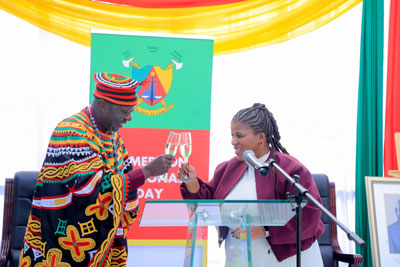
High Commissioner Solomon Azoh-Mbi and Siphokazi Ndudane, Special Advisor to South Africa's Minister of Employment and Labour raising a toast (photo supplied) |
|
|---|
At a vibrant and colourful reception marking Cameroon’s National Day on May 20, Cameroon’s High Commissioner to South Africa, Solomon Azoh-Mbi delivered a reflective and forward-looking address that celebrated the enduring spirit of a nation forged through diversity, resilience and unity.
In remarks that resonated deeply with the African experience, Azoh-Mbi described Cameroon’s journey as one shaped by the difficult legacies of colonial fragmentation, yet defined by an unwavering determination to build a united national identity. Recounting the historic 1972 referendum that unified East and West Cameroon into a single republic, he said the country’s National Day remains “a significant milestone in Cameroon’s unique experience in nation building in Africa.” The speech reflected on Cameroon’s remarkable multicultural character — home to more than 250 ethnic groups and a rich bilingual heritage — while acknowledging the challenges that naturally arise in maintaining national cohesion in a complex and evolving society. Yet the central message was one of optimism and continuity. “Cameroon has sometimes been stirred, but not shaken,” Azoh-Mbi noted, emphasising dialogue, democratic inclusion and shared prosperity as pillars of the country’s future. |
|
|---|
| Lamola defends multilateralism, says foreign policy must improve lives at home |
|
|
|---|
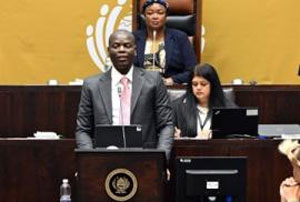
International Relations and Cooperation Minister Ronald Lamola says South Africa will continue pushing for reforms to global governance institutions while using foreign policy to drive economic growth and development at home. Presenting the Department of International Relations and Cooperation’s 2026/27 Budget Vote in Parliament on Tuesday, Lamola said developing countries continued to face unfair treatment in the global system. “The world is changing, but many of its institutions still reflect old patterns of power. Developing countries continue to face unsustainable debt, unequal access to development finance and growing pressure to align with powerful geopolitical blocs. “South Africa’s responsibility is to advance a fairer and more representative global order. This means continuing to call for reform of the United Nations, especially the Security Council, so that it can respond more effectively to contemporary global challenges,” he said.
|
|
|---|
| | NEPAD at 25: AUDA-NEPAD Reflects on Continental Development and Calls for Faster African Integration |
|
|
|---|
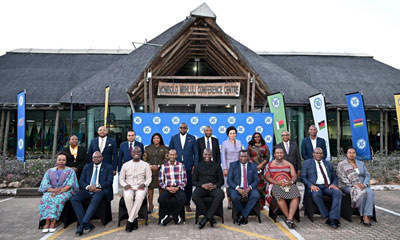
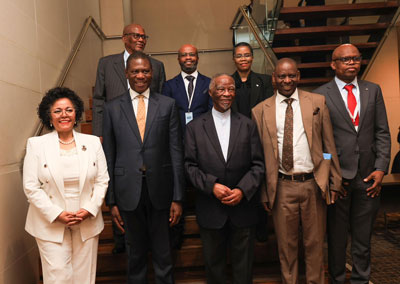
Pictured front row (l-r) AUDA-NEPAD Chief Executive Officer Nardos Bekele-Thomas, Deputy President Paul Mashatile, former President Thabo Mbeki with officials (photo supplied) |
|
|---|
The African Union Development Agency-NEPAD (AUDA-NEPAD) has marked 25 years since the launch of the New Partnership for Africa’s Development (NEPAD), reflecting on a quarter century of programmes aimed at advancing infrastructure, agriculture, governance, health, industrialisation and regional integration across the continent. The anniversary celebrations, held in Johannesburg and Cape Town during May 2026, brought together African leaders, policymakers, business representatives and development partners to assess progress made since NEPAD was launched in Abuja, Nigeria, in 2001. Speaking during the commemorations, AUDA-NEPAD Chief Executive Officer Nardos Bekele-Thomas described the anniversary as “a measure of resolve” and a reflection of Africa’s efforts to pursue development through African-led institutions and partnerships. She said what began as a declaration of shared intent had evolved into an institution with measurable programmes across all five regions of Africa, covering infrastructure, agriculture, healthcare, youth development, climate resilience and women’s empowerment. |
|
|---|
| South Africa and Botswana seek mutually beneficial growth |
|
|
|---|
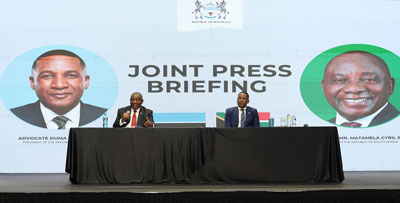
Botswana and South Africa must seek mutually beneficial growth that creates jobs in equal measure while also deepening trade and investment relations between the two countries, President Cyril Ramaphosa said.
“In my meeting earlier today with President Boko, we agreed that one of our greatest tasks of the moment is to further deepen trade and investment relations between our two countries,” President Ramaphosa said on Thursday evening. Speaking at the Botswana-South Africa Business Forum, the President said the economic interests of both countries are closely intertwined. “We must therefore seek mutually beneficial growth that creates jobs in equal measure for Botswana and South Africans. We each have substantial natural resources and developed industrial capacity that we must harness,” he said. The business forum was held on the margins of the 6th Bi-National Commission between Botswana and South Africa. |
|
|---|
| A return to the culture of going to the Cinema - South Africa and China |
|
|
|---|
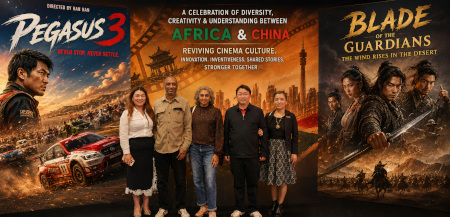
Pictured (l-r) Yinan Zhao - CMG, Kirtan Bhana and Anisha Pemjee - TDS, Ni Yanshuo and Hongzhen Xie - ChinAfrica |
|
|---|
The screening of Pegasus 3 and Blade of the Guardians: The Wind Rises in the Desert at Nu Metro Hyde Park in Johannesburg formed part of the “Silk Road Lights” Chinese Film Overseas Screening and Promotion initiative hosted by China Media Group (CMG), offering South African audiences an exciting glimpse into the dynamism and growing global reach of contemporary Chinese cinema.
The event highlighted the growing cultural exchanges between Africa and China, where storytelling, creativity and artistic collaboration are encouraging people from different backgrounds discover each other in new and meaningful ways. The attendance of Chinese Ambassador to South Africa, Wu Peng, reinforced the importance of people-to-people diplomacy through the arts, particularly during a period of deepening awareness and engagement between African and Chinese societies. |
|
|---|
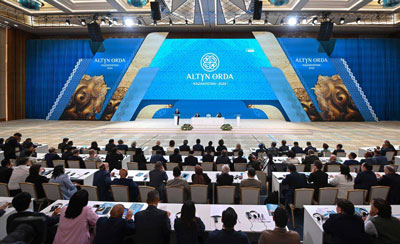
The international symposium "The Golden Horde as a Model of Steppe Civilization"
|
|
|
|---|
TThe international symposium “The Golden Horde as a Model of Steppe Civilization: History, Archaeology, Culture, and Identity” took place in Astana on 19-20 May, 2026, with the participation of President Kassym-Jomart Tokayev. The event brought together more than 350 delegates, including representatives of international organisations, leading foreign and Kazakh historians, archaeologists, researchers and scholars specialising in the history of the Great Steppe and the Golden Horde.
The symposium focused on the historical, political, economic and cultural legacy of the Golden Horde and its role in the development of Eurasian civilization. In his remarks, President Tokayev emphasized the importance of objective and depoliticised historical scholarship, the civilizational significance of the Golden Horde, and the need to strengthen international academic cooperation in the study of the shared heritage of the Great Steppe. The President also highlighted Kazakhstan’s ongoing efforts to preserve, modernise and promote the historical and intellectual legacy of the Ulus of Jochi through research, education, digital initiatives and international cultural engagement. |
|
|---|
|
|