


Is China’s Artificial Intelligence Revolution a New Pathway to Africa’s Technological Advancement?
Fiifi Nettey – West Africa Correspondent for The Diplomatic Society
9 November 2026
The emergence of Artificial Intelligence (AI) marks another significant milestone in this evolution from analogue to digital, opening new frontiers and further transforming how humanity lives, works and interacts. As the world embraces a new era of digital convergence and artificial intelligence, some countries are emerging as major forces in shaping the future of technology and China is one of them.
China is making remarkable strides in these areas of information technology and AI, investing heavily in artificial intelligence, information technology and other advanced technologies to develop innovative solutions and address complex challenges facing humanity.
Across Africa, the influence of Chinese technology is becoming increasingly visible. From electric vehicles (EVs) and telecommunications equipment to advanced digital systems and smart infrastructure, Chinese technological innovations and investments are gaining a strong foothold across the continent. This growing presence explains the expanding influence of China's technological revolution on Africa's development landscape.
These investments are creating opportunities for Africa to bridge its technological gap, modernise key sectors, strengthen its infrastructure and accelerate its development to keep pace with a rapidly evolving world.
In Ghana, for instance, Chinese vehicles, including electric vehicles (EVs), are increasingly becoming a common sight on the roads, with more people embracing them for their affordability, convenience and technological features.
Beyond the automotive industry, many Ghanaian businesses and institutions are increasingly turning to Chinese companies for innovative technological solutions, reflecting the growing confidence in China's technological capabilities and its expanding role in Ghana's digital and industrial development.
In a conversation with Mr. XIONG Jie, Secretary-General of the Global South Academic Forum (GSAF), he highlighted China’s growing commitment to supporting Africa’s artificial intelligence (AI) development through strategic partnerships, infrastructure investment, technology transfer and capacity building.
Mr. Jie recalled that at the 2024 Forum on China-Africa Cooperation (FOCAC) Beijing Summit, Chinese President Xi Jinping announced ten partnership actions aimed at advancing modernisation jointly between China and Africa. These included strengthening international cooperation in AI capacity building, complementing a UN General Assembly resolution initiated by China and co-sponsored by more than 140 countries.
He explained that this commitment is already translating into tangible infrastructure development across the continent. For instance, the second phase of the China-aided Zimbabwe High-Performance Computing Centre was delivered in August 2025, with Huawei providing the computing platform.
Chinese technology companies, including Huawei, are also expanding cloud computing and data-centre infrastructure across several African countries, helping to reduce the cost of deploying AI solutions locally and strengthening the continent’s digital capabilities, he added.
According to Mr. Jie, China-Africa AI cooperation is being advanced through four key areas; First, capacity building. Under the China-Africa Action Plan for Building a Community with a Shared Future in Cyberspace (2025–2026), China is organising training programmes in AI and related fields for African professionals. Both sides are also working to advance the Global AI Governance Initiative and coordinate their positions on AI-related issues at the United Nations, G20 and BRICS platforms.
Second, infrastructure development. China is supporting the development of computing facilities, cloud services and data-centre infrastructure to provide African countries with the technological foundations needed to develop and deploy AI applications.
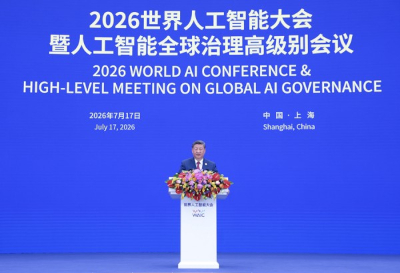
Third, technology application. At the 2026 World AI Conference in Shanghai, President Xi announced that China’s AI-powered weather early-warning system, known as "Mazu", would be deployed in 30 countries, with African agriculture among the key potential beneficiaries. Open-source AI models, including DeepSeek and Alibaba’s Qwen, have also provided technological foundations for the development of local African AI models, such as Egypt’s "Karnak" and Nigeria’s "Atlas".
Fourth, institutional cooperation. The inauguration of the World AI Cooperation Organization in Shanghai, with 10 African countries among its 29 founding members, represents another important step towards strengthening international collaboration and ensuring that developing countries have a voice in shaping the future of AI.
"As President Xi stated at the 2026 World AI Conference, AI development should not be the solo performance of any single country, but rather a symphony of global cooperation. China is committed to helping countries of the Global South strengthen their capacity and bridge the digital and intelligence divide," Mr. Jie said.
He further noted that the African Union’s Continental AI Strategy is being aligned with China-Africa partnership initiatives to promote mutually beneficial cooperation.
"The future is one of joint modernisation. Through the FOCAC framework, we can advance infrastructure development, talent training and governance cooperation, enabling African countries to build their own AI capabilities on their own terms," he concluded.
Mr. Bright Blewu, a keen observer of the global technological and AI development scene noted that the days of scepticism about China's technological and AI development have ended. China, he said, has made tremendous and impressive strides that are globally acknowledge and recongnised that country as a leader in the field.
Mr. Blewu who is a journalist with nearly four decades of practice said China has demonstrated its bullishness in the filed by acquiring key strategic and anchor shares in global super brands such as the German giant Mercedes Benz A-G.
Beijing Automotive Group (BAIC), and major state-owned automaker and local joint venture partner is currently the biggest individual shareholder with 9.98% shares in Mercedes. Li Shufu of the Tenacious 3 Prospect Investment Limited, a private Chinese company holds up to 9.7% shares.
"African countries including Ghana have been beneficiaries of Chinese technological support in different ways. Ghana's has so far, been mainly through accelerated infrastructure modernisation, green energy development and enhanced digital and technical skills training", he said.
Substantial Chinese investments have also helped Ghana to finance energy grids road networks and value-addition processing plants to help it reduce being merely an exporter of raw materials.
It has been to the extent that Ghana's President John Mahama at the Presidential Investment Forum in Beijing in May 2026 express Ghana's appreciation: "The 4 billion dollar investment by China has fuelled Ghana's industrial infrastructure growth from energy and roads to manufacturing and technology, creating jobs and empowering local enterprises." He added
Mr Blewu indicated also that, the developments in China's technological revolution have been of immense benefit to the whole world; especially in terms of cost and affordability to many nations. More so, China's support have often been unconditional and apolitical, making them flexible to manage and contrasting more favourably with support from elsewhere.
There have been quite a number of criticisms from some quarters, that Chinese support to some countries, especially in Africa, that involve huge sums that appear unpayable are a "financial death trap". That has so far not been proven to be the case. Where countries default in loan payment, Beijing has acted with leniency and never with hostility.
"All indications are that the Dragon's vision of its technological revolution is clear and sound. It's future is bright and offers hope for global cooperation in employing technology for peaceful human development as it is deeply rooted in Chinese civilisation" he added.
A friend in Nigeria, who spoke on condition of anonymity, said China has emerged as an important technology partner for his country, particularly in telecommunications, 5G, cloud computing, artificial intelligence, digital education and renewable energy.
According to him, Chinese companies such as Huawei have contributed significantly to the development of Nigeria’s digital infrastructure while also training thousands of Nigerians in various ICT-related skills. China is further supporting initiatives in areas including artificial intelligence, robotics, cybersecurity, software development and digital education, while Chinese technologies are increasingly being deployed in solar-energy projects.
He said the relationship is gradually evolving and the traditional model of supplying technology to Nigeria is with greater emphasis on skills development, digital infrastructure and strengthening local technological capacity.
Another colleague from Ethiopia told me the Chinese presence in Ethiopia can be felt so well they are in they are supporting their telecommunications network and also have a Wechat kind of chat called Telebre which is helpful.
My South African colleagues observed that Chinese electric vehicles (EVs) are becoming increasingly visible on the streets, reflecting the growing influence of Chinese technology in the automotive industry. They remarked that Chinese manufacturers have arrived on the global stage, and this could well be China's moment. According to them, the vehicles are durable, convenient, technologically advanced and relatively affordable, making them an increasingly attractive choice for consumers. As a result, more people are turning to Chinese brands when purchasing vehicles.
Similarly, Kwesi Oduro, a businessman, observed that this is increasingly becoming China's time, as Chinese technology and innovation are making their presence felt across the world. From mobile phones and electric vehicles to infrastructure development, agriculture and other critical sectors, China's technological footprint is expanding rapidly.
He noted that China is making significant contributions to global development and that the world, particularly Africa, should recognise the opportunities this presents. He believes African countries must embrace cooperation with China, build strategic partnerships and work together to harness its technological expertise, investment and innovation to accelerate development across the continent.
There is clear evidence that China is making a significant impact on the African continent through investments in artificial intelligence (AI), technological innovation and infrastructure development, helping to accelerate Africa’s development and bridge the technological gap through collaborations.

West Correspondent for The Diplomatic Society