


Santo Domingo: Primera de América – A City of Firsts
By Anisha Pemjee (TDS)

5 November 2026
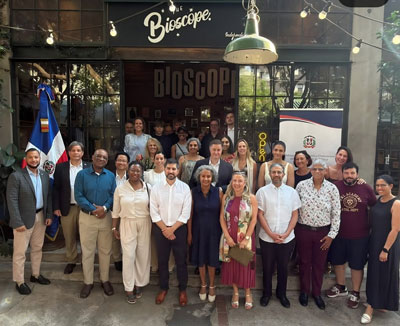
The screening of Santo Domingo: Primera de América, directed by José Enrique Pintor, at the Bioscope in Johannesburg, presented by the Embassy of the Dominican Republic in South Africa as part of the Diversitas Festival, offered an opportunity to revisit one of the most consequential chapters in the history of the Americas.
The film explores the establishment of Santo Domingo and its significance as the first permanent European settlement in the Americas. Founded in 1498, the city became home to the first cathedral, hospital, customs house and university in the New World. Its colonial architecture and urban planning influenced subsequent European settlements across the continent. UNESCO recognises its Colonial City as a World Heritage Site.
Pintor's film provides an accessible chronological account of the city's beginnings, bringing together historical dramatisation, personalities and events that shaped its development. It introduces audiences to the city's historical importance, but also invites a more difficult examination of what its establishment represented for the people who inhabited the island before the arrival of the Europeans.
The human cost of conquest
The arrival of the Spaniards was not the beginning of civilisation on Hispaniola. It was the beginning of the destruction of an established indigenous society.
The Taíno people had developed organised communities, political structures, agricultural systems and rich cultural traditions. They were capable, resourceful and socially established, living in harmony with their environment long before Christopher Columbus arrived in 1492. Their society was not an empty landscape awaiting European discovery.
Spanish colonisation brought a brutal disruption to this way of life. Violence, forced labour, displacement, disease and the destruction of indigenous social structures devastated the Taíno population. Their land was taken, their autonomy dismantled and their communities subjected to a colonial system that valued their labour and resources above their lives and dignity.
The scale of the demographic catastrophe was immense. Within decades, the indigenous population had suffered an extraordinary decline. While disease played a significant role, it cannot be separated from the violence, exploitation, malnutrition and harsh conditions imposed by the colonial authorities.
As the indigenous population diminished, enslaved Africans were brought to the island to sustain the colonial economy. Their forced labour became central to the development of the settlement and its institutions.
The establishment of Santo Domingo's impressive colonial institutions and architectural heritage came at an enormous human cost. The wealth and development of colonial cities across the Americas were built substantially on the labour of enslaved Africans, who received none of the benefits of the societies they were forced to build. Their contribution was extracted through violence and coercion, while the rewards accumulated in the hands of colonial authorities and settlers.
The Dominican friar Fray Antón de Montesinos, whose 1511 sermon challenged the treatment of indigenous people by Spanish colonists, is an important figure in this history. His intervention exposed the contradiction between the Christian principles professed by the colonisers and the brutality of the system they had established. It was an early challenge to colonial oppression, although it did not bring an end to exploitation.
The debate has now moved towards reparatory justice, with the UN General Assembly's March 2026 resolution recognising the transatlantic trafficking and racialised enslavement of Africans as the gravest crime against humanity and calling for dialogue on reparations.
Yet, the abolition of slavery did not undo the destruction of indigenous societies, restore what was taken from them or compensate generations of Africans whose forced labour created wealth from which they were excluded.
The Diversitas Festival provides an appropriate platform for this conversation. Cultural diplomacy through cinema allows countries to share their histories while inviting audiences from other societies to question, reflect and engage with difficult historical truths.
For South African audiences, the parallels are particularly relevant. South Africa's own history demonstrates how racial classification, dispossession and institutionalised inequality can shape generations long after the formal systems that created them have ended. There is a common lesson in both histories: political and legal emancipation are necessary, but they are not sufficient to achieve social and economic equality.
The unfinished legacy of freedom
Ultimately, Santo Domingo: Primera de América is an important contribution to the preservation of Dominican historical heritage. It introduces audiences to a city whose influence extended far beyond the Caribbean and whose colonial institutions became precedents for European expansion throughout the Americas.
But the film also invites a larger question about how nations remember their past.
Can a country celebrate its place in the history of the Americas without confronting the destruction, exploitation and inequalities that formed part of its foundations?
Perhaps the most important reflection to emerge from the screening is that history should not only celebrate the institutions and personalities that shaped nations. It must also give recognition to those whose suffering, labour and resistance helped build them.