
NEPAD at 25: AUDA-NEPAD Reflects on Continental Development and Calls for Faster African Integration
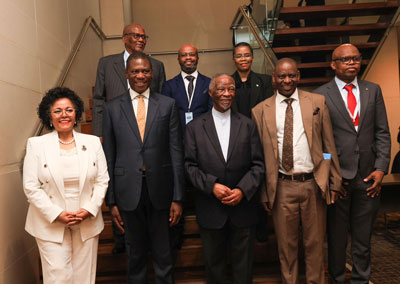
TDS - 24 May 2026
The African Union Development Agency-NEPAD (AUDA-NEPAD) has marked 25 years since the launch of the New Partnership for Africa’s Development (NEPAD), reflecting on a quarter century of programmes aimed at advancing infrastructure, agriculture, governance, health, industrialisation and regional integration across the continent.
The anniversary celebrations, held in Johannesburg and Cape Town during May 2026, brought together African leaders, policymakers, business representatives and development partners to assess progress made since NEPAD was launched in Abuja, Nigeria, in 2001.
Speaking during the commemorations, AUDA-NEPAD Chief Executive Officer Nardos Bekele-Thomas described the anniversary as “a measure of resolve” and a reflection of Africa’s efforts to pursue development through African-led institutions and partnerships.
She said what began as a declaration of shared intent had evolved into an institution with measurable programmes across all five regions of Africa, covering infrastructure, agriculture, healthcare, youth development, climate resilience and women’s empowerment.
Bekele-Thomas highlighted several examples of programmes implemented under AUDA-NEPAD and its predecessor structures.

Under the Comprehensive Africa Agriculture Development Programme (CAADP), Rwanda’s Crop Intensification Programme increased maize yields from about 780 kilograms per hectare to more than 2,500 kilograms per hectare, while wheat yields increased by 173%.
In Ghana, a Private Sector Liaison Office established within the Ministry of Food and Agriculture enabled farmer associations and agribusinesses to participate directly in budget planning processes. By 2009, Ghana’s agricultural sector growth had reached 6.2%, while rice production increased by 30%.
On regional integration and trade facilitation, Bekele-Thomas said AUDA-NEPAD’s One-Stop Border Post programme had expanded from a single crossing at Chirundu between Zambia and Zimbabwe in 2009 to 32 operational border posts across the continent, with another 85 in preparation. According to AUDA-NEPAD, border waiting times have fallen by an average of 42%, with some crossings recording reductions of up to 98%.
She also pointed to infrastructure projects implemented through the Programme for Infrastructure Development in Africa (PIDA), including a 510-kilometre regional power transmission line announced in January 2025 linking the electricity grids of Kenya, Tanzania, Uganda, Rwanda, Burundi and the Democratic Republic of the Congo. The project connected 21 previously off-grid villages, reaching nearly 198,000 people and creating more than 400 jobs.
In the health sector, the African Medicines Regulatory Harmonisation programme reduced medicine registration timelines within the East African Community from between two and three years to under 12 months, improving access to treatments for HIV, malaria and tuberculosis.
Bekele-Thomas said AUDA-NEPAD’s Southern Africa Tuberculosis and Health Systems Support Project in Zambia supported treatment for more than 198,000 tuberculosis patients between 2017 and 2023, contributing to a 26% reduction in TB incidence and increasing treatment success rates from 81% to 98%.
She also highlighted programmes focused on women and youth empowerment. The NEPAD Spanish Fund for African Women’s Empowerment supported 79 projects across 38 African countries over 15 years, directly benefiting more than 1.2 million women.
In Ethiopia, the Skills Initiative for Africa programme supported 210 women in the country’s northeast through cooperatives focused on poultry, dairy and vegetable production. By January 2026, all participants had passed national competency assessments and were generating regular income from their enterprises.
In Lagos, Nigeria, 100 young people, 75% of them women, received animation training through Basement Animation’s Capacity Building Programme, with graduates securing employment in the creative sector.
Bekele-Thomas said one of the agency’s major institutional milestones was the transition from NEPAD into AUDA-NEPAD, strengthening its role as the technical implementation agency of the African Union and aligning its work with Agenda 2063.
Other milestones identified during the anniversary included the establishment of the African Peer Review Mechanism (APRM), now adopted by 44 African Union member states, the implementation of PIDA, support for the African Continental Free Trade Area (AfCFTA), and partnerships with Regional Economic Communities across the continent.
The anniversary programme officially opened with a Gala Dinner held in Johannesburg on 14 May 2026 on the sidelines of the 74th Ordinary Session of the AUDA-NEPAD Steering Committee. The session was convened under the leadership of Angola following the election of Angolan President João Lourenço as Chairperson of the AUDA-NEPAD Heads of State and Government Orientation Committee in February 2026.

A second major event, the NEPAD@25 High-Level Business Breakfast, was co-hosted in Cape Town on 21 May 2026 by AUDA-NEPAD and the Thabo Mbeki Foundation. The gathering focused on African industrialisation, investment and regional integration.
Addressing the Business Breakfast, South African Deputy President Paul Mashatile said Africa needed to move from reflection to implementation if the continent was to achieve the objectives of Agenda 2063.
Mashatile said intra-African trade remained too low, accounting for only about 15% of Africa’s total trade, despite the opportunities created by the AfCFTA. He argued that Africa could no longer continue exporting raw materials while importing finished goods at higher prices.
“Africa cannot continue exporting raw materials while importing finished products at a higher value,” Mashatile said. “This model exports jobs, industrial capacity and opportunity outside the continent.”
Mashatile also stressed the importance of transport systems, ports, rail corridors, energy infrastructure and digital connectivity in supporting industrialisation and continental integration. He called for reforms to global financial institutions, including the International Monetary Fund and World Bank, to provide fairer representation and financing mechanisms for African countries.
The Deputy President further condemned recent anti-migrant violence in South Africa, describing xenophobic attacks as inconsistent with the country’s values and calling for law enforcement agencies to address criminality through legal processes.
Former South African President Thabo Mbeki, one of NEPAD’s founding architects, also addressed the gathering. Mbeki reiterated the importance of African cohesion, integration and partnerships in advancing the continent’s development agenda, themes that formed part of the original NEPAD vision launched in 2001.
The anniversary events mark the beginning of a year-long programme of policy dialogues, youth and women’s summits, regional showcases and private sector engagements focused on infrastructure, climate adaptation, digital transformation and agricultural value chains across Africa.