

Art, Memory and South Africa's Unstoppable Journey Forward
By Kirtan Bhana – TDS
4 November 2025
Nearly three decades into democracy, South Africa continues to draw strength and inspiration from the creative expressions born in the darkest chapters of its past. The story of the Ifa Lethu Foundation and the art it has helped to recover and celebrate is a vivid reminder that culture is both a record of struggle and a catalyst for progress.
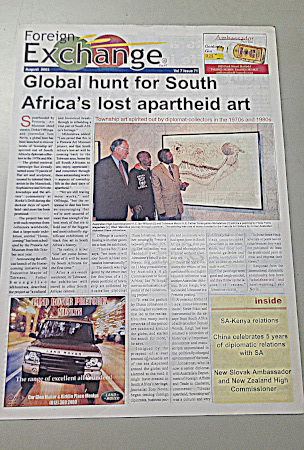
It was in 2003, when an exhibition of township art at the Pretoria Art Museum sparked a global search for South Africa’s lost artworks from the apartheid era. The moment was inspired by the gesture of Australian diplomat Diane Johnstone, who during her posting to Pretoria between 1974 and 1976, acquired a portfolio of 17 pieces created by South African township artists. Her decision decades later to return the collection to South Africa marked a powerful act of cultural restitution and symbolised Australia’s unwavering support for the anti-apartheid struggle.
Two years later, in 2005, this initiative gave rise to the Ifa Lethu Foundation meaning “Our Treasures” in Zulu dedicated to repatriating, preserving, and promoting South Africa’s artistic and cultural heritage.
That same spirit of reclamation and renewal was celebrated once again with the opening of ‘Still We Rise’, a powerful joint exhibition by the Ifa Lethu Foundation and the SABC Art Collection, launched at The Atrium, Keyes Art Mile in Rosebank on October 30th. The exhibition will run until November 23rd, coinciding with South Africa’s historic hosting of the G20 Summit the first time the gathering of the world’s major economies is being held on African soil, with the African Union now formally a member.
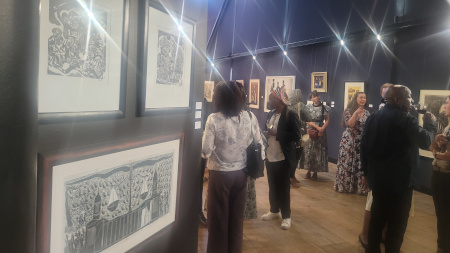
The timing is poetic. As the G20 looks to redefine its purpose amid global uncertainty, South Africa’s cultural industries are being recognised as engines of innovation and inclusive growth vital components of a new, human-centred economic model.
From tourism and creative enterprises to media, design, and performance, art remains the connective tissue between identity and innovation reminding us that development is not only measured in GDP, but in imagination.
Art as Freedom and Responsibility
At the opening, Dr. Narissa Ramdani, Director of the Ifa Lethu Foundation, emphasised the importance of keeping the stories of apartheid-era artists alive. Their work continues to inspire a new generation of creators — challenging young South Africans to use their art to question, to build, and to celebrate freedom.
The exhibition also featured selections from the SABC Art Collection, showcasing the depth of South African creativity across generations. The public broadcaster’s role in supporting the nation’s artists highlights how media institutions can nurture the country’s creative capital, sustaining a culture of expression that fuels both national healing and global connection.
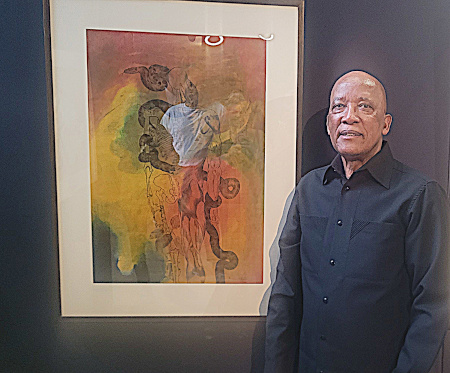
Among the notable attendees was Mr Dikobe Ben Martins, a member of the South African Communist Party (SACP) and a former cabinet minister, whose iconic 1974 painting Apartheid Kills was on display. Created during the height of political resistance, it stands as a visual testimony to both oppression and defiance and to art’s capacity to bear witness when words fail.
Australia and South Africa — A Bond Forged in Principle
Australia’s principled opposition to apartheid is well-documented, and its contribution to South Africa’s cultural renewal continues to resonate. High Commissioner Tegan Brink, who also shares South African roots, reflected on this historic relationship, recalling how the repatriation of artworks through the Ifa Lethu Foundation became a bridge between the two nations one grounded in shared values of justice, democracy, and human dignity.
A 2003 cover story of Foreign Exchange the print predecessor to The Diplomatic Society captured this moment before the publication transitioned to its digital platform in 2020, adapting to global change during the COVID-19 pandemic. It serves as a reminder that just as institutions evolve, so too does the spirit of solidarity that unites nations through acts of culture and conscience.
The Unstoppable Movement Forward
Whatever the outcomes of the G20, South Africa’s trajectory remains one of unstoppable progress. The Constitution guarantees every citizen’s right to freedom of expression the very foundation that ensures injustice and discrimination can never again be hidden in silence.
The exhibition stands as a marker on that long road to freedom, a testament to the enduring power of art to heal, to unite, and to propel humanity forward.
In reclaiming its lost treasures, South Africa reclaims something far greater the assurance that no act of creativity is ever truly lost when it speaks to the human spirit. As the nation continues to rise, its art remains both a mirror of the past and a map to a more just and inspired future.