

Football Multilateralism Coming to America
By Kirtan Bhana – TDS
24 October 2025
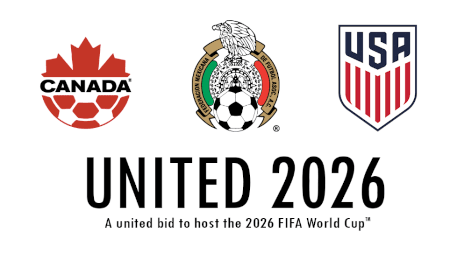
When the United States, Mexico, and Canada open their doors to the world in 2026 for the first-ever tri-national FIFA World Cup, they will not only be hosting the largest sporting event in history - 48 nations, nine African teams among them - but also staging an extraordinary test of diplomacy, unity, and global cooperation.
The tournament arrives at a time when America’s foreign policy is often seen as erratic and its economic posture sometimes hostile to the very principles of multilateralism it once championed. Yet, paradoxically, sport, particularly football, may prove to be the unifying force capable of restoring trust, fostering solidarity, and bridging divides.
A Tournament Beyond Borders
The 2026 World Cup will be a logistical and diplomatic masterpiece. Matches will be played across 16 cities in three nations, stretching from Vancouver in Canada to Mexico City and down to Miami in the United States. This vast geography demands unprecedented coordination across borders—on transport, security, environment, and cultural exchange. It will also test the political maturity and cooperation of three neighbours whose relations have, in recent years, been marred by disputes over trade, migration, and climate commitments.
Yet, football offers what politics cannot: a shared emotional language. In the roar of stadiums filled with fans from every corner of the planet, the artificial lines of political separation dissolve. The “United” in the United States, Mexico, and Canada will, at least for a few weeks, carry a deeper resonance, one of people rather than policy.
The African Surge: A Continental Dream
Africa’s presence at the 2026 tournament will be historic. For the first time, nine African nations—Morocco, Tunisia, Egypt, Algeria, Ghana, Senegal, South Africa, Cape Verde, and Ivory Coast—have secured qualification. This expansion, from five to nine slots, signals FIFA’s recognition of Africa’s growing strength and influence in the world of football.
South Africa’s return to the world stage, after last appearing as hosts in 2010, rekindles the spirit of Ubuntu that defined that unforgettable tournament. Cape Verde’s qualification, meanwhile, is a fairytale for a nation of just over half a million people—the second smallest ever to qualify, after Iceland. Morocco, who made history in 2022 by becoming the first African team to reach the semi-finals, will again carry the continent’s hopes with their combination of flair, discipline, and determination.
The African Union Commission’s Chairperson, H.E. Mahmoud Ali Youssouf, summed up the continental sentiment aptly:
“These teams carry the hopes of over a billion Africans. Their success demonstrates Africa’s growing unity, skill, and global confidence.”
This collective African journey embodies more than just sport—it’s a form of soft power, an assertion of presence and pride in a global narrative often skewed toward the West.
The United States: A Mirror of Contradictions
As the leading host, the United States faces an ironic challenge. At a time when it will be inviting the world in the spirit of friendship, it continues to wrestle with deep internal division and an unpredictable foreign policy that has strained its relationships across continents.
From the Caribbean standoff with Venezuela and the growing militarisation of domestic affairs, to trade tensions with China and a wavering commitment to climate agreements, Washington’s credibility as a global leader has often come into question. The World Cup presents an opportunity to reassert that leadership—not through dominance or ideology, but through hospitality, inclusivity, and cultural diplomacy.
Football diplomacy may accomplish what traditional diplomacy has struggled to achieve: reconnect America with the global community on a human level. It’s worth recalling that sport has historically transcended politics—from “ping-pong diplomacy” thawing U.S.-China relations in the 1970s, to South Africa’s 1995 Rugby World Cup symbolising reconciliation in the post-apartheid era.
In a world increasingly fractured by geopolitical rivalries and economic coercion, the World Cup’s message of teamwork and fair play might just offer a model for a different kind of international order.
The Tri-Nation Alliance: A Test of North American Solidarity
The collaboration between Canada, Mexico, and the United States is itself a symbolic experiment in “football multilateralism.” The three nations, bound by geography but divided by political ideology, will need to demonstrate a level of partnership and trust rarely seen in international relations.
Their success in co-hosting could redefine regional cooperation under the USMCA (United States–Mexico–Canada Agreement) framework, broadening its meaning beyond trade to include culture, sustainability, and social cohesion. The North American World Cup will also test the region’s capacity to handle vast environmental and social responsibilities—from carbon emissions to human rights—under global scrutiny.
If managed well, this joint effort could inspire new models of transnational collaboration: where competition breeds camaraderie, and where borders are not barriers but bridges.
The Beautiful Game as a Global Conscience
Football, often called the beautiful game, mirrors humanity’s collective story—its struggles, ambitions, and hopes. The 2026 World Cup, coming amid climate anxieties, migration crises, and political upheaval, will serve as a canvas for renewal.
For the global South, particularly Africa, it will be a platform to showcase the creativity, resilience, and unity that define the continent. For the global North, it will be a moment to rediscover humility, openness, and empathy.
A Moment to Reimagine the Global Game
If the tri-nation hosts rise above political discord, and if football’s spirit of unity triumphs over division, this could be remembered not only as the biggest tournament in history but also as the most transformative.
For Africa, it may be the moment its long-deferred dream of global football glory finally comes true. For the Americas, it may be a lesson in collective leadership. And for the world, it may well be a reminder that what unites us is infinitely greater than what divides us.