


Mpondo Festival promotes Gender Dignity and Economic Development
by HRH Stella Sigcau and TDS
19 September 2025
The rolling hills of the Eastern Cape came alive with colour, rhythm, and the beating heart of tradition as the amaMpondo hosted the 19th Mpondo Culture and Heritage Festival and the 17th Mpondo Reed Dance in September 2025. Against the vibrant backdrop of song, dance, and the swirl of traditional attire, leaders from across Southern Africa gathered to reaffirm the power of culture as a unifying force and a tool for social and economic progress.
The festival, commonly known as Umgubho wamaMpondo, transformed Matshona Village into a sea of celebration. More than 20,000 people filled the Lwandlolubomvu Great Place and Royal Grounds, joining hands in a cultural experience that not only showcased the splendour of amaMpondo traditions but also strengthened the bonds between kingdoms, communities, and nations.
A Festival with Purpose
Beyond the dazzling parades, horse processions (umkhwelo), traditional dances, and feasts of Mpondo cuisine, the event carried a strong social message. The theme of this year’s Reed Dance was awareness and action against Gender-Based Violence (GBV). Traditional leaders, including His Majesty King Silosohlanga, emphasised that economic development in rural areas is key to uplifting communities and curbing crime and GBV. “Improving the quality of life in rural areas is not only about prosperity,” he declared, “it is about dignity, safety, and the protection of our people.”
Nkosi Jongilanga Sigcau, Chairman of the Festival, echoed these sentiments, noting that such cultural gatherings fuel both the tourism and cultural economy, boosting local hospitality industries while positioning Mpondoland as a prime tourism destination. Partnerships across sectors—tourism, agriculture, and beyond—were underscored as vital to building self-sustaining communities.
Unity Across Kingdoms
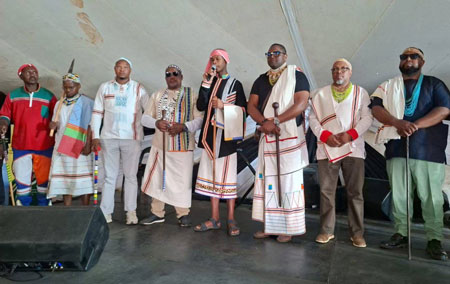
This year’s festival also marked 21 years of alliance between the amaMpondo and the Ndebele, Tsonga, and Pedi kingdoms. Prince Serake Mampuru of the Pedi Kingdom hailed the alliance as instrumental in dismantling tribal stereotypes left behind by apartheid. “Culture,” he said, “is the antidote to division. Our shared traditions bind us, not our imposed differences.”
Prince Nyiko Mahumane of amaTsonga urged traditional leaders to embrace economic partnerships and sustainability, while Nkosi Magodongo Mahlangu highlighted the richness of cultural exchange the festival facilitates. “Each year,” he said, “we learn, we share, and we grow closer as one African family.”
The Swati Kingdom’s Prince Nkosingiphile Dlamini celebrated the blood and marital ties between amaMpondo and Eswatini, reminding the audience that two late amaMpondo queens were descendants of King Sobhuza. “Our bonds,” he said, “are not only cultural, they are deeply personal.”
The festival also welcomed delegations from the Xhosa, Bhaca, Tswana, Thembu, Xesibe, and Sotho royal houses, alongside international guests and artists from Botswana. Botswana’s very own Casper the Golden Voice electrified the crowd with a performance that resonated across borders.
A Living Legacy
Since its launch in 2006 in honour of the late ANC liberation activist Nkosi Ntsikayezwe Sigcau, the Mpondo Festival has grown into one of South Africa’s most iconic cultural celebrations. Its companion event, the Mpondo Reed Dance, established in 2008, has become a proud platform for young women to showcase their cultural pride while advancing social causes. In 2026, the festival will celebrate its 20th anniversary, a milestone that will undoubtedly reaffirm its role as a custodian of heritage and unity.
At this year’s event, young maidens (inkciyo) travelled from across the Eastern Cape—from Lusikisiki to Engcobo—to participate in the Reed Dance. Dressed in resplendent traditional attire, they carried reeds in symbolic procession, pledging to uphold cultural values while adding their voices to the campaign against GBV.
Music, Dance, and Cultural Splendour
The atmosphere was festive and jubilant, with performances from local artists such as Ntombethongo, Sivuyile RSA, Tofolux, Makholwa, Selula, Gqubemswanini, and Mvee, alongside guest groups like the King Mampuru Traditional Group from Limpopo. Each performance brought a new dimension to the celebration, with rhythms and dances weaving together a tapestry of South Africa’s cultural diversity.
Visitors immersed themselves in the sensory delights of Mpondo culture—from the rich flavours of traditional cuisine to the artistry of clothing, beadwork, and the majesty of horse parades. The sound of drums, ululations, and laughter filled the air, as the spirit of ubuMpondo, ibuyambo nesiMpondo (the essence and pride of being Mpondo) was on full display.
Unity in Diversity
The 19th Mpondo Festival stood as a vivid reminder that culture is more than performance—it is a bridge. In bringing together diverse peoples from South Africa and beyond, it celebrated the continent’s shared heritage and its capacity for unity. In a time when challenges such as GBV, poverty, and crime threaten communities, the festival reaffirmed the role of traditional leadership in driving not only social cohesion but also meaningful economic development.
As the amaMpondo continue their campaign for their language to be recognised as South Africa’s 13th official language, their culture remains a powerful beacon of resilience and pride. The Mpondo Festival, with its kaleidoscope of colour, song, and meaning, reminds us that Africa’s strength lies in the beauty of its diversity—and in the unity born from celebrating it.