


From the Alps to the Karoo
Lessons 30-Year-Old South Africa Can Learn from 734-Year-Old Switzerland
by Kirtan Bhana – TDS | 19 August 2025
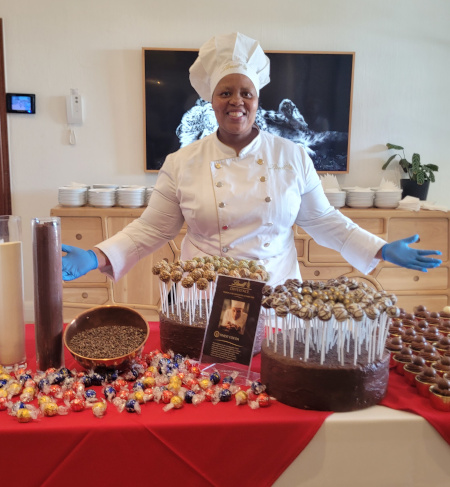
Lindt, the Swiss Chocolatier had a variety of sweet treats for guests to enjoy (photo: TDS)
Switzerland turned 734 years old this month. South Africa, in comparison, has only just celebrated 30 years of democracy. Yet, standing side by side, these two diverse, multilingual societies share more in common than might first appear. Switzerland’s long journey of unity in diversity, stability, and innovation offers South Africa valuable lessons as it continues its own path of transformation.
Often described as a living postcard, Switzerland has for centuries captivated the world with its majestic landscapes, modern cities, and remarkable ability to harmonise cultures and languages. Four official languages — German, French, Italian, and Romansh — coexist in a confederation that has endured since 1291. Today, Switzerland is a global leader in innovation, finance, diplomacy, and quality of life — a model of stability in a turbulent world.
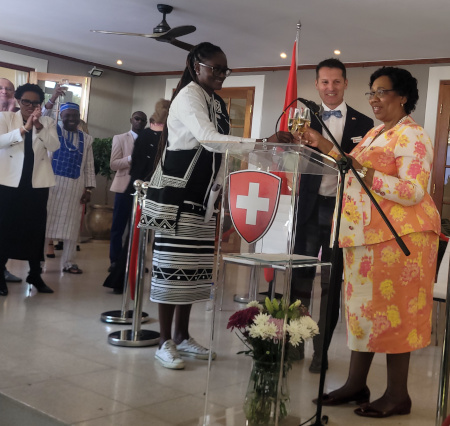
Toasting to the deeper cooperation between the nations for a shared prosperity (photo: TDS)
The Swiss National Day on August 1 marks the signing of the Federal Charter of 1291, considered the founding pact of the Swiss Confederation. This year, celebrations in Pretoria on August 14 were hosted by Ambassador Mirko Manzoni at the Swiss residence. The event, rich in symbolism and tradition, underscored the enduring bonds between Switzerland and South Africa.
In his remarks, Ambassador Manzoni reminded guests that, while Switzerland has four official languages and South Africa eleven, both nations face the challenge of building unity out of diversity. “Of course, it is not enough to recognize several languages in the constitution,” he observed. “Living together peacefully in diversity requires continuous commitment and continuous effort.”
South Africa’s Minister of Defence, Angie Motshekga, who was the guest of honour, highlighted Switzerland’s remarkable achievement of remaining at peace for over 200 years. She praised its consistent role in global mediation and conflict resolution, noting that Ambassador Manzoni himself played a key role in the peace process in Mozambique.
Importantly, the event was not just about history or diplomacy. Guests savoured raclette, melted cheese paired with bread, potatoes, and charcuterie — a taste of Swiss tradition — alongside rich coffee and world-famous Swiss chocolate. These flavours created a sensory bridge between Pretoria and the Alps, reminding everyone that culture, too, is a powerful diplomat.
South Africa’s 30 years of democracy are a mere heartbeat compared to Switzerland’s centuries of statehood. But Switzerland’s experience offers practical inspiration:
• Democratic Stability: Switzerland’s system of direct democracy, where citizens are regularly consulted on national policy, fosters inclusiveness and long-term planning. South Africa, still consolidating its young democracy, can learn from this participatory approach.
• Economic Resilience: With one of the world’s highest per capita incomes (around US$90,000) and a reputation for stability, Switzerland demonstrates how innovation, skilled expertise, and sound monetary policy can anchor a country through global turbulence. South Africa, navigating economic headwinds, can benefit from Swiss expertise in finance and industry.
• Education and Skills: Switzerland’s apprenticeship and vocational training system is world-renowned. For a South Africa grappling with youth unemployment, adapting elements of this model could be transformative.
• Peace and Mediation: Switzerland’s tradition of neutrality and conflict resolution has given it global influence. As Africa takes on a more prominent role in world affairs, South Africa can work with Switzerland to strengthen its own peace diplomacy capacity.
The relationship between Switzerland and South Africa is already robust. Over 100 Swiss companies operate in South Africa, employing tens of thousands and contributing to sectors such as pharmaceuticals, machinery, and food processing. Educational exchanges allow young South Africans to study in Switzerland, while South African wine and agriculture find eager markets in Europe. Tourism flows both ways — South Africans are drawn to Switzerland’s alpine wonderland, while Swiss travelers flock to South Africa’s wildlife, coasts, and cultural diversity.
• Democratic Stability: Switzerland’s system of direct democracy, where citizens are regularly consulted on national policy, fosters inclusiveness and long-term planning. South Africa, still consolidating its young democracy, can learn from this participatory approach.
• Economic Resilience: With one of the world’s highest per capita incomes (around US$90,000) and a reputation for stability, Switzerland demonstrates how innovation, skilled expertise, and sound monetary policy can anchor a country through global turbulence. South Africa, navigating economic headwinds, can benefit from Swiss expertise in finance and industry.
• Education and Skills: Switzerland’s apprenticeship and vocational training system is world-renowned. For a South Africa grappling with youth unemployment, adapting elements of this model could be transformative.
• Peace and Mediation: Switzerland’s tradition of neutrality and conflict resolution has given it global influence. As Africa takes on a more prominent role in world affairs, South Africa can work with Switzerland to strengthen its own peace diplomacy capacity.
The relationship between Switzerland and South Africa is already robust. Over 100 Swiss companies operate in South Africa, employing tens of thousands and contributing to sectors such as pharmaceuticals, machinery, and food processing. Educational exchanges allow young South Africans to study in Switzerland, while South African wine and agriculture find eager markets in Europe. Tourism flows both ways — South Africans are drawn to Switzerland’s alpine wonderland, while Swiss travelers flock to South Africa’s wildlife, coasts, and cultural diversity.
President Cyril Ramaphosa’s forthcoming visit to Switzerland, announced during the Pretoria reception, is expected to elevate these ties to new heights. With a focus on trade, investment, education, and cultural cooperation, both nations stand to benefit from deepened engagement.
Switzerland’s 734 years of unity, peace, and innovation are not a distant story but a living example of what a diverse society can achieve through persistence, dialogue, and inclusion. South Africa, at just 30 years of democracy, is still in its early chapters — but by drawing lessons from Switzerland’s success and radicalising the partnership between the two countries into a comprehensive strategic alliance, the potential for accelerated transformation is immense.