


ASEAN a Celebration of Unity, Growth, and Global Partnerships
by Kirtan Bhana - TDS
8 August 2025
On a tense border between Cambodia and Thailand, a ceasefire was declared this week, brokered under the quiet but firm guidance of ASEAN in Kuala Lumpur, Malaysia. The swiftness of this diplomatic resolution is a reminder of what this 10-member bloc has come to represent: a region determined to solve its own disputes through dialogue, consensus, and cooperation.
It was in Bangkok, 1967, when five founding nations — Indonesia, Malaysia, the Philippines, Singapore, and Thailand — signed the Bangkok Declaration, creating what would become the Association of Southeast Asian Nations (ASEAN). Today, with ten members and a combined population of over 660 million, ASEAN is one of the most dynamic, resilient, and influential regional organisations in the world. Its logo — ten golden rice stalks bound together — captures the essence of this unity: individual strength woven into collective prosperity.
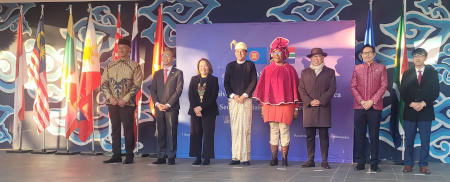
In Pretoria, the ASEAN Pretoria Committee gathered to celebrate ASEAN Day and the 2nd anniversary of the ASEAN–South Africa Sectoral Dialogue Partnership. Hosted at the Indonesian Ambassador’s residence, the event brought together diplomats, South African government officials, and business leaders.
Thein Min Htun, Myanmar’s Chargé d’Affaires and Chair of the ASEAN Pretoria Committee, welcomed guests, while Ambassador Ntombizodwa Lallie, Acting Deputy Director-General at South Africa’s Department of International Relations and Cooperation, delivered heartfelt congratulatory remarks on behalf of the South African government.
“ASEAN is not just a regional organisation. It is a community of destiny,” Ambassador Lallie reminded attendees, quoting former ASEAN Secretary-General Surin Pitsuwan. She highlighted ASEAN’s journey from the Bangkok Declaration to its role today as a driver of peace, economic integration, and innovation.
South Africa’s designation in 2023 as a Sectoral Dialogue Partner marked a new chapter in Africa–ASEAN relations. This partnership — only the second of its kind for an African country — reflects shared values of multilateralism, inclusive development, and respect for sovereignty.
At the heart of this cooperation lies the Treaty of Amity and Cooperation (TAC), ASEAN’s foundational peace pact, which South Africa has embraced as a framework for dialogue, stability, and regional friendship. The 2nd ASEAN–South Africa Joint Sectoral Cooperation Committee (ASA-JSCC) has already delivered concrete engagement, especially in agriculture — the most advanced area of collaboration to date.
Through this partnership, South African stakeholders such as the Department of Agriculture, AgriSA, Fresh Produce Exporters’ Forum (FPEF), and the Red Meat Industry Services have engaged directly with ASEAN Secretariat divisions on trade, investment, halal certification, and tourism. These talks are paving the way for expanded market access, particularly for South African citrus, meat, and fresh produce, while strengthening tourism promotion between the regions
ASEAN’s influence extends well beyond its borders. Its cooperation with China and India — two of the world’s fastest-growing economies — has expanded rapidly in trade, infrastructure, and technology. These ties position ASEAN as a strategic connector between Asia, Africa, and the wider world.
For South Africa, this means new opportunities in diversified trade, greater participation in Asian value chains, and the potential to act as a gateway for ASEAN into Africa. President Cyril Ramaphosa’s upcoming attendance at the ASEAN Summit in Malaysia this October is expected to deepen these opportunities and signal a stronger commitment to inter-regional engagement.
ASEAN’s 58-year journey from a small regional pact to a global economic and diplomatic force is tribute to what unity of purpose and respect for diversity can achieve. Its partnership with South Africa is still young but already showing promising results, particularly in agriculture, with room to grow into science, education, digital innovation, and green technology.
As Ambassador Lallie concluded, this partnership can “serve as a bridge between Africa and Southeast Asia, fostering greater inter-regional connectivity and understanding.” From the rice fields of Southeast Asia to the citrus orchards of South Africa, the story of ASEAN–Africa cooperation is just beginning — and it promises a future of shared prosperity, stability, and mutual respect.