


Arab League Council Condemns Israeli Aggression Against Iran and Calls for Intensified Efforts to Achieve Ceasefire
22 June 2025
Istanbul
The Council of the League of Arab States condemned the Israeli aggression against the Islamic Republic of Iran, describing it as a blatant violation of the sovereignty of a United Nations member state and a threat to regional peace and security.
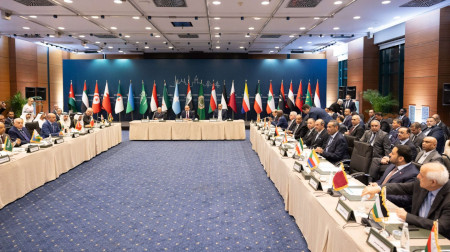
In a statement issued following its extraordinary ministerial-level session held in Istanbul on the sidelines of the 51st session of the Council of Foreign Ministers of the Organisation of Islamic Cooperation (OIC), the Council stressed the need to stop this aggression and to intensify regional and international efforts to de-escalate tensions and achieve a comprehensive ceasefire. It also called for a return to negotiations to reach an agreement on the Iranian nuclear file and expressed support for all efforts aimed at achieving calm.
The Council also called on the international community—particularly the United Nations Security Council—to uphold its responsibilities to stop the Israeli aggression, which constitutes a clear breach of international law and a threat to regional security. It emphasized that the only viable path to resolving crises in the region is through diplomacy and dialogue in accordance with international law and the UN Charter, and that the current crisis cannot be resolved by military means.
The Council underlined that comprehensive calm in the region cannot be achieved without addressing the root causes of conflict and tension, beginning with ending Israeli aggression on the Gaza Strip, allowing the immediate, sufficient, and sustainable entry of humanitarian aid through relevant UN agencies, and halting illegal Israeli measures in the occupied West Bank that undermine the two-state solution and the prospects for a just and comprehensive peace.
It warned that Israel is pushing the region toward further conflict and tension, which necessitates effective and influential international action to stop Israeli aggression and policies, and to work toward achieving a just and comprehensive peace that ensures the security of all by implementing relevant international legitimacy resolutions and the 2002 Arab Peace Initiative. In this context, the Council welcomed the convening of a high-level international conference on the peaceful settlement of the Palestinian issue and the implementation of the two-state solution, to be held at the UN General Assembly in New York under the joint presidency of Saudi Arabia and France.
The Arab League Council urged all UN member states to actively participate in this conference once a new date is announced. It also welcomed Egypt’s hosting of a high-level international conference to support early recovery and the reconstruction of Gaza and the implementation of the relevant Arab-Islamic plan at the earliest opportunity following a ceasefire.
The Council stressed the need to respect the freedom of navigation in international waterways, based on relevant international legal principles, and to avoid consequences that could impact the global economy and energy supply lines. It reaffirmed the principles of the UN Charter that prohibit the use or threat of force in international relations, and called for resolving disputes through peaceful means. It emphasized respect for the territorial integrity and sovereignty of states, good neighborly relations, and rejection of any attempt to undermine the security and stability of states in the region. It also demanded respect for state sovereignty and the condemnation of any violations of their airspace by any party.
The Council highlighted the importance of refraining from targeting nuclear facilities that are under International Atomic Energy Agency (IAEA) safeguards in accordance with relevant agency and Security Council resolutions, stressing that such actions constitute a blatant violation of international law. It warned of the dangers of nuclear emissions and leaks in the region and their devastating humanitarian and environmental consequences.
Finally, the Arab League Council reiterated the importance of establishing a Middle East free of nuclear weapons and other weapons of mass destruction, in accordance with international resolutions and the decisions of previous Arab summits, most recently the 34th Arab Summit held in Baghdad in May. It emphasized the need for all regional countries to join the Treaty on the Non-Proliferation of Nuclear Weapons (NPT).
Statement Issued by the Extraordinary Ministerial Session of the Council of the League of Arab States
On the Repercussions of the Israeli Aggression Against the Islamic Republic of Iran and the Security of the Region
Istanbul
20 June 2025
The Council of the League of Arab States, convened in an extraordinary ministerial session in Istanbul on 20 June 2025, on the sidelines of the 51st session of the Council of Foreign Ministers of the Organisation of Islamic Cooperation, under the chairmanship of the Hashemite Kingdom of Jordan, and upon the request of the Republic of Iraq—supported by the member states and with the participation of foreign ministers of the Arab states, heads of delegations, and the Secretary-General of the League of Arab States—met to discuss the repercussions of the Israeli aggression against the Islamic Republic of Iran and its impact on regional security.
After hearing the intervention by the head of the Iraqi delegation, as well as interventions from other member states and the Secretary-General, the Council adopted the following steps and positions:
1. Condemns the Israeli aggression against the Islamic Republic of Iran, which constitutes a blatant violation of the sovereignty of a United Nations member state and a threat to regional peace and security. The Council emphasizes the necessity of halting this aggression and intensifying regional and international efforts to de-escalate tensions and achieve a comprehensive ceasefire.
2. Calls for a return to negotiations to reach an agreement on the Iranian nuclear file, and supports all efforts aimed at achieving de-escalation.
3. Calls on the international community, especially the UN Security Council, to fulfill its responsibilities in stopping the Israeli aggression, which is a clear breach of international law and a threat to regional security.
4. Affirms that diplomacy and dialogue, in accordance with international law and the UN Charter, are the only way to resolve regional crises, and stresses that the current crisis cannot be resolved through military means.
5. Stresses that comprehensive calm in the region can only be achieved by addressing the root causes of conflict and tension, beginning with:
• Ending the Israeli aggression on Gaza,
• Allowing immediate, sufficient, and sustainable entry of humanitarian aid through relevant UN agencies,
• Halting illegal Israeli measures in the occupied West Bank that undermine the two-state solution and the prospects for a just and comprehensive peace.
6. Warns that Israel is pushing the region toward greater conflict and tension, requiring effective and influential international action to stop Israel’s aggressive actions and policies, and to work toward achieving a just and comprehensive peace that ensures the security of all parties by implementing relevant international resolutions and the 2002 Arab Peace Initiative.
7. Welcomes the convening of a high-level international conference for the peaceful settlement of the Palestinian issue and the implementation of the two-state solution at the UN General Assembly in New York, co-chaired by Saudi Arabia and France, and urges all UN member states to participate actively once a new date is announced.
8. Welcomes Egypt’s hosting of a high-level international conference to support early recovery and reconstruction in Gaza and to implement the relevant Arab-Islamic plan as soon as a ceasefire is reached.
9. Stresses the importance of respecting the freedom of navigation in international waterways, based on relevant international law, and avoiding negative impacts on the global economy and energy supply lines.
10. Affirms the importance of adhering to the UN Charter, especially the prohibition on the use or threat of force in international relations, calls for peaceful dispute resolution, and stresses the need to respect the sovereignty, territorial integrity, and stability of all states in the region, and to condemn any violations of their airspace.
11. Stresses the need to refrain from targeting nuclear facilities that are under IAEA safeguards in accordance with relevant agency and UN Security Council resolutions, as such actions constitute a serious breach of international law. The Council warns of the dangers of nuclear emissions or leakage in the region and their devastating humanitarian and environmental consequences.
12. Reaffirms the importance of establishing a Middle East free of nuclear weapons and other weapons of mass destruction, in accordance with international resolutions and previous Arab summit declarations, most recently the 34th Arab Summit held in Baghdad in May 2025, and emphasizes the necessity for all countries in the region to join the Treaty on the Non-Proliferation of Nuclear Weapons (NPT).
(Statement No. 264 – Ref: D.G.A./1/20/6/2025)